Insights
An object can work and still make the person using it uncomfortable. A place can be accessible and still make us feel excluded. In our essays, guides and interviews on Design for All and Inclusive Design, we explore the distance between being able to use something and wanting to choose it.
Latest
-
 Culture and tourism · Interview · 2 min
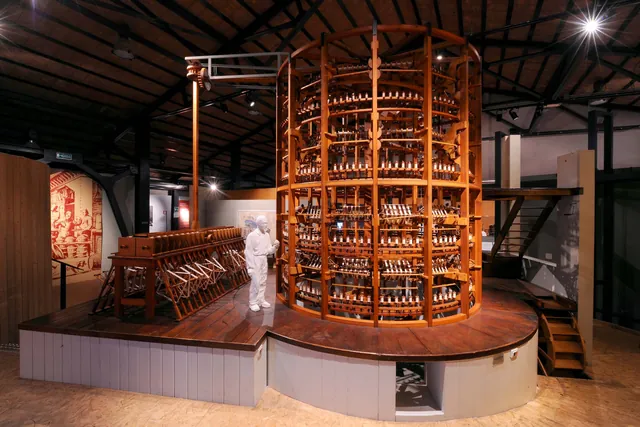
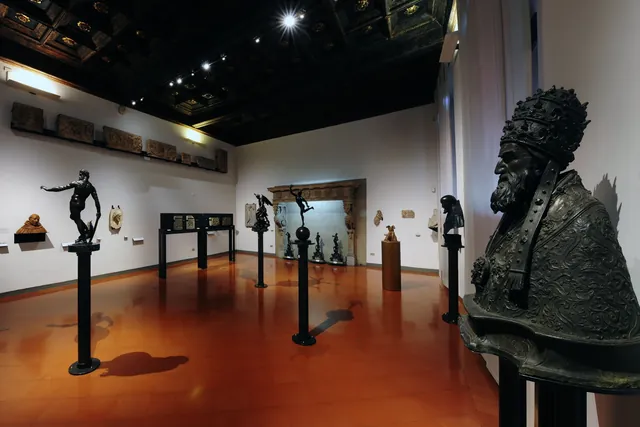
Bologna Civic Museums: the need before the building
Answers the question: Why should an accessibility plan start from needs rather than from the building?
In MuseoOggi, Francesco Rodighiero describes the process Design for All Italia carried out for the Bologna Civic Museums, on which he worked directly. From listening to decisions: the role of needs in shaping the project.
-
 Products and spaces · Essay · 5 min
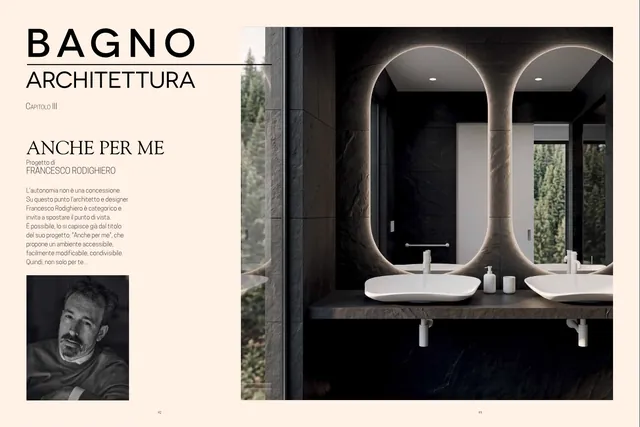
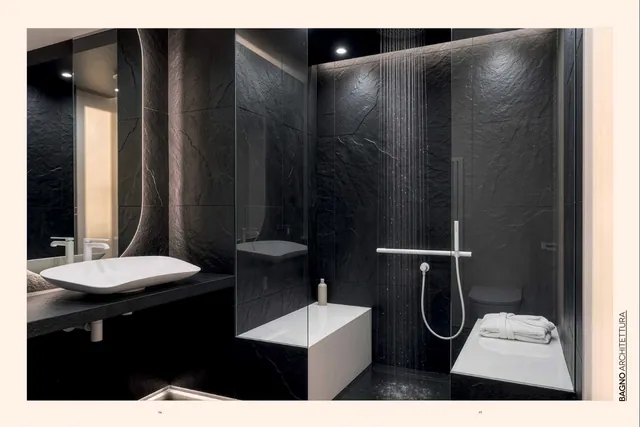
“Anche per me”: an accessible, inclusive bathroom in 5.5 square metres
Answers the question: How do you design a bathroom for everyone in 5.5 square metres?
A double washbasin, an open shower with two seats, just three grab rails: a home bathroom that does not look like a “disabled bathroom”. The Prime washbasin, the floor-standing WC and DM 236/1989, contrast and light, the feature in Il Bagno Oggi e Domani and INOUT 2026.
-
 Design for All · News and events · 5 min
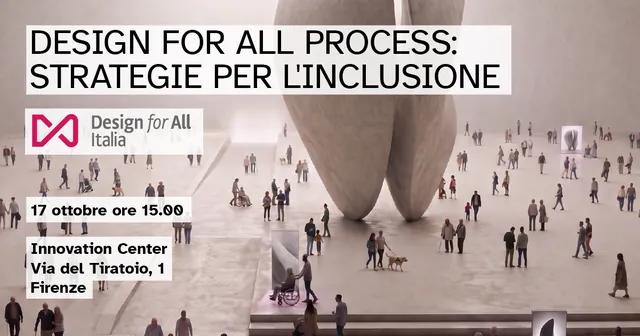
Design for All Process: the Florence event of 17 October 2026
Answers the question: What did the Design for All Process event in Florence bring together?
A network of museums, a mass-produced industrial product and artificial intelligence technologies in the same afternoon: the programme of Design for All Italia’s event in Florence. In each case there is a point beyond which inclusion can no longer be designed, only remedied.
Where to begin
-
 Design for All · Guide · 8 min
Design for All, Inclusive Design, Universal Design: design approaches compared
Answers the question: What is the difference between Design for All, Inclusive Design and Universal Design?
Three approaches with the same aim and different traditions: the seven principles of American Universal Design, the British Inclusive Design practice of offering alternatives, and the European Design for All process, which involves people at every stage. What really sets them apart, and why our work starts from Design for All.
-

 Standards and value · Guide · 10 min
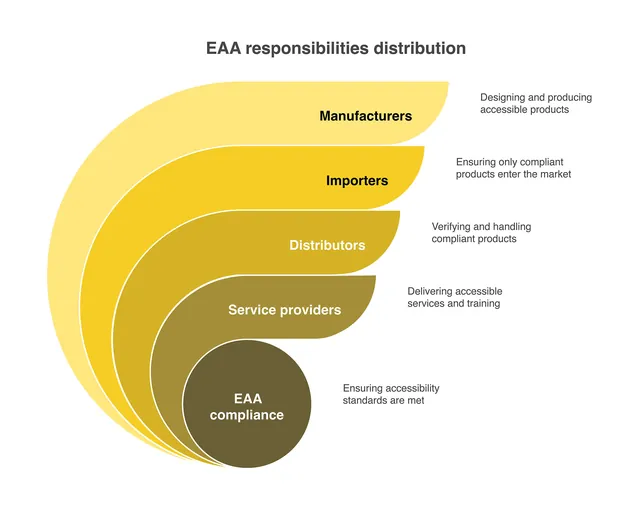
European Accessibility Act: what really changes for companies in product design
Answers the question: What does the European Accessibility Act really ask of those who design products?
Since 28 June 2025 the EAA has made accessibility a market requirement for digital products and services: scope, exceptions, enforcement and penalties in Italy. Compliance, however, cannot be achieved with a checklist once the product is finished: it is decided in the brief, with people and with prototypes.
-
 Standards and value · Guide · 11 min
The ROI of accessibility: the economic dividend of Design for All
Answers the question: What is the return on investing in accessibility?
Accessibility designed in from the start pays off in four areas: revenue, costs, competitive advantage and resilience. We bring together European data, documented cases from Legal & General to the Bologna Civic Museums (Musei Civici di Bologna), the World Bank’s estimate of construction costs and the formula for calculating the return on a project.
All insights
Topic
Type
28 insights
Design for All 12 articles
-
Design for All · News and events · 5 min
Design for All Process: the Florence event of 17 October 2026
Answers the question: What did the Design for All Process event in Florence bring together?
A network of museums, a mass-produced industrial product and artificial intelligence technologies in the same afternoon: the programme of Design for All Italia’s event in Florence. In each case there is a point beyond which inclusion can no longer be designed, only remedied.
-
 Design for All · Interview · 3 min
Inclusive design: the Design for All approach on Radio Canale Italia
Answers the question: What is inclusive design, as explained on the radio?
As a guest on Radio Canale Italia’s Storytime, Francesco Rodighiero described accessibility as the way a project is approached from the very beginning. He spoke about sustainability and timescales in hotels, users whose needs go beyond disability, Co-Design, aesthetics and the trends observed by Design for All Italia.
-
 Design for All · Interview · 3 min
Francesco Rodighiero on Rai Radio 3: Design for All at the heart of the cultural debate
Answers the question: Why is Design for All a cultural issue, not only a technical one?
As a guest on Rai Radio 3’s “A3 – Il formato dell’arte”, Francesco Rodighiero spoke about accessibility as a matter of design culture rather than compliance. The BTicino Linea 5000 case and a critical look at Milan Design Week.
-
 Design for All · News and events · 3 min
Design for All Italia: a new section in our portfolio
Answers the question: Which projects has the studio developed with Design for All Italia?
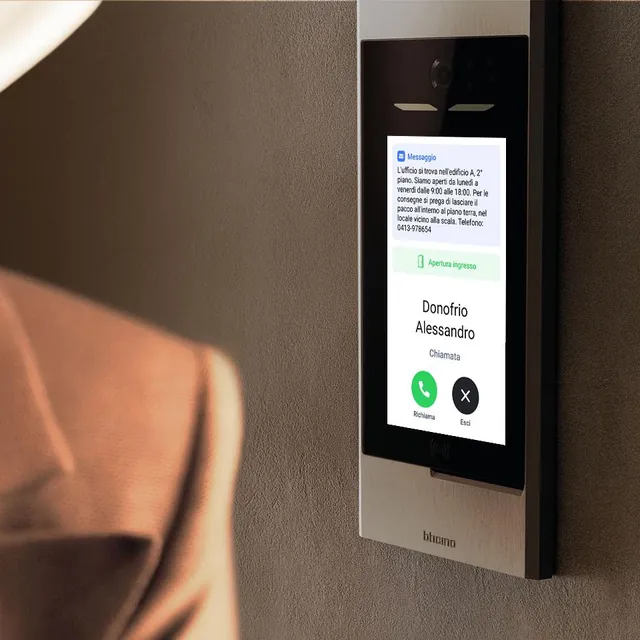
A section of our portfolio brings together the projects we have developed with the association Design for All Italia: the user interface of BTicino’s Linea 5000, retail technologies analysed with people, and a pointer to the association’s case studies.
-
Design for All · Guide · 8 min
Design for All, Inclusive Design, Universal Design: design approaches compared
Answers the question: What is the difference between Design for All, Inclusive Design and Universal Design?
Three approaches with the same aim and different traditions: the seven principles of American Universal Design, the British Inclusive Design practice of offering alternatives, and the European Design for All process, which involves people at every stage. What really sets them apart, and why our work starts from Design for All.
-
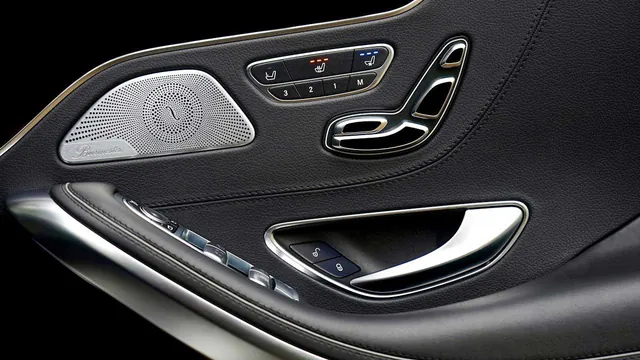 Design for All · Essay · 6 min
On ergonomics: from holistic ergonomics to Design for All
Answers the question: How does ergonomics relate to Design for All?
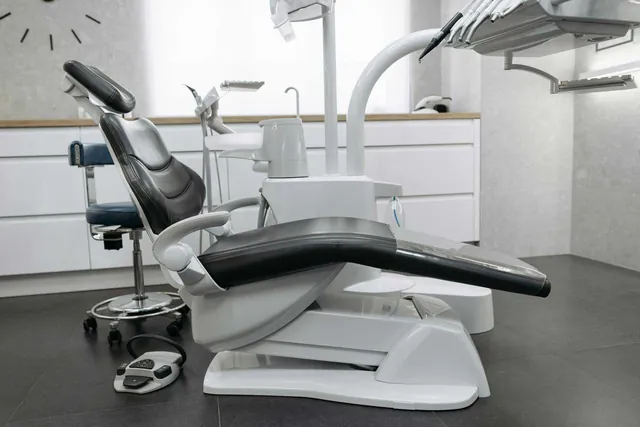
Ergonomics studies the interactions between people and the other elements of a system; Design for All inherits its rigour and asks what a solution says about the person who uses it. The IEA definition, Luigi Bandini Buti’s holistic ergonomics and the case of safety grab rails.
-
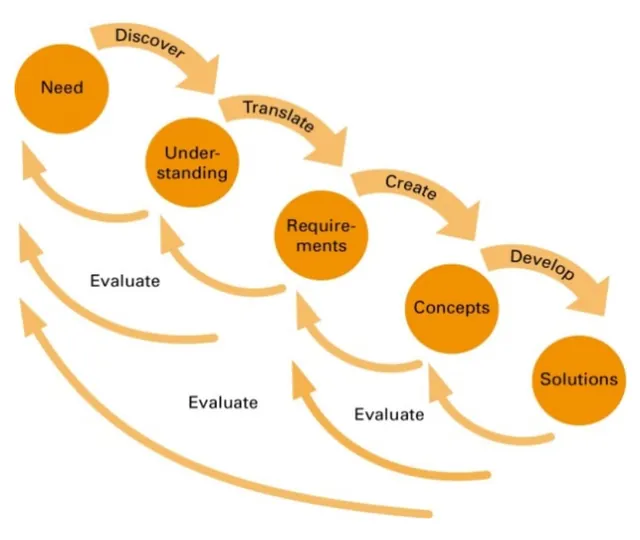 Design for All · Essay · 4 min
Design for All and Wikipedia: why it is not Universal Design
Answers the question: Why is Design for All not Universal Design?
Wikipedia presents Design for All as a variant of Universal Design, and in Design for All Italia’s view this is an error of approach. The state of the entry in 2026, the Stockholm definition and three differences: in nature, in the role of people, and in where dignity is decided.
-

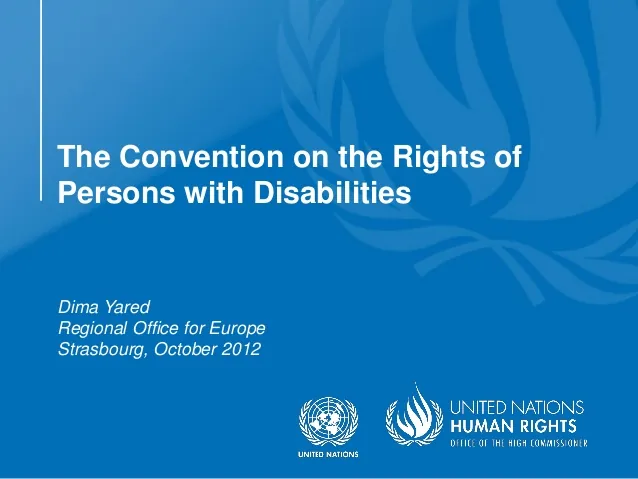 Design for All · Essay · 5 min
“The disabled”, “differently abled”, people with disabilities: it is not just a matter of language
Answers the question: “The disabled”, “differently abled” or people with disabilities: what changes in the design?
In Italian, the term is “persona con disabilità”, person with disabilities: it is the term used by the UN Convention and, since 2024, by Italian law. From the Convention to the ICF, why putting the person before the condition changes the way we design, and why Design for All speaks of human diversity and aspirations, not of categories.
-

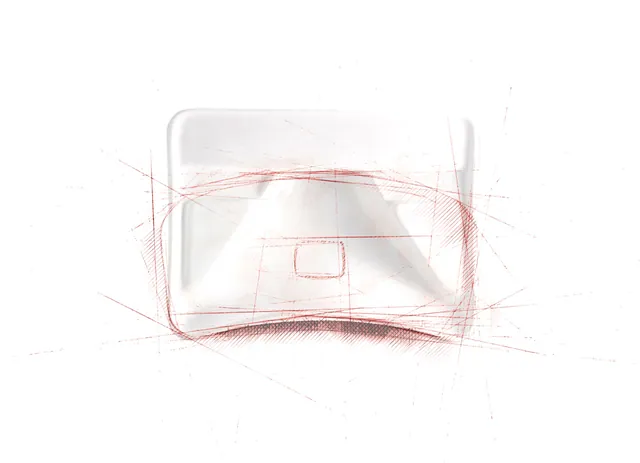 Design for All · Interview · 5 min
Design for All in design practice: an interview with Francesco Rodighiero
Answers the question: What does Design for All mean in everyday design practice?
Seven questions put to Francesco Rodighiero in June 2021: what Design for All means, how it translates into a product, where accessible design is heading. The answers are reproduced as given at the time; updates, from the Prime washbasin to the Shine washbasin, are collected at the end.
-
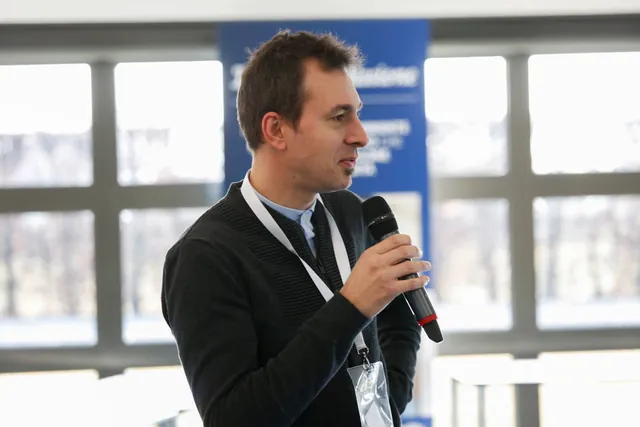 Design for All · News and events · 3 min
Francesco Rodighiero, president of the Design for All Italia association
Answers the question: What is Francesco Rodighiero’s remit as president of Design for All Italia?
Francesco Rodighiero has chaired the Design for All Italia association since 2020, with a programme focused on Law 13/1989, training and Co-Design. The board elected in 2021 and the current one, the stated objectives and the documented work, from the Bologna Civic Museums to Linea 5000 and the Florence event.
-
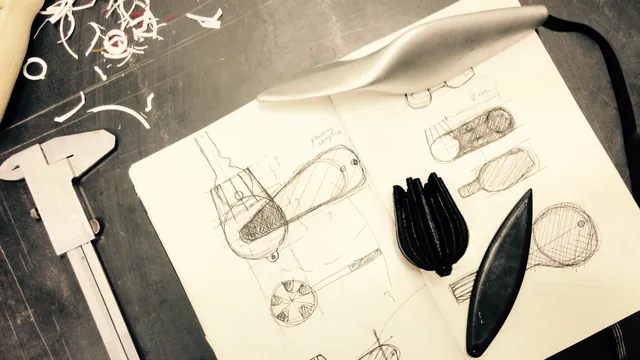
 Design for All · Essay · 7 min
Design for accessibility and beauty
Answers the question: Can accessibility and beauty belong to the same design?
An aid that works but is not liked ends up in a drawer: the lesson of a 2016 hackathon with people with rheumatoid arthritis. From testing products on the market to dignity as the unknown quantity in design, through to ten criteria for designing beautiful aids and the solutions that have followed.
-

 Design for All · Essay · 12 min
The phenomenology of exclusion: Design for All as a contemporary approach to design
Answers the question: Why do products exclude people, and how does Design for All prevent it?
A 2012 essay, republished with dated notes: design that ignores the diversity of people produces exclusion, both social and perceived. From Universal Design to ageing, from the examples of Autogrill and the Delicanter to the case of Ikea, why Design for All is the process that prevents it.
Standards and value 5 articles
-
Standards and value · Guide · 10 min
European Accessibility Act: what really changes for companies in product design
Answers the question: What does the European Accessibility Act really ask of those who design products?
Since 28 June 2025 the EAA has made accessibility a market requirement for digital products and services: scope, exceptions, enforcement and penalties in Italy. Compliance, however, cannot be achieved with a checklist once the product is finished: it is decided in the brief, with people and with prototypes.
-
Standards and value · Guide · 11 min
The ROI of accessibility: the economic dividend of Design for All
Answers the question: What is the return on investing in accessibility?
Accessibility designed in from the start pays off in four areas: revenue, costs, competitive advantage and resilience. We bring together European data, documented cases from Legal & General to the Bologna Civic Museums (Musei Civici di Bologna), the World Bank’s estimate of construction costs and the formula for calculating the return on a project.
-
 Standards and value · Guide · 7 min
Design for All and Italy’s Recovery Plan (PNRR): what remains for accessibility
Answers the question: What has the PNRR left behind for accessibility?
Italy’s National Recovery and Resilience Plan (PNRR) comes to an end in 2026, after funding two accessibility measures – for cultural venues and for pathways to independence, the second scaled back when the Plan was revised. We set out the updated budgets and targets, the obligations that remain and the process that makes an investment last beyond the funding period.
-

 Standards and value · Guide · 8 min
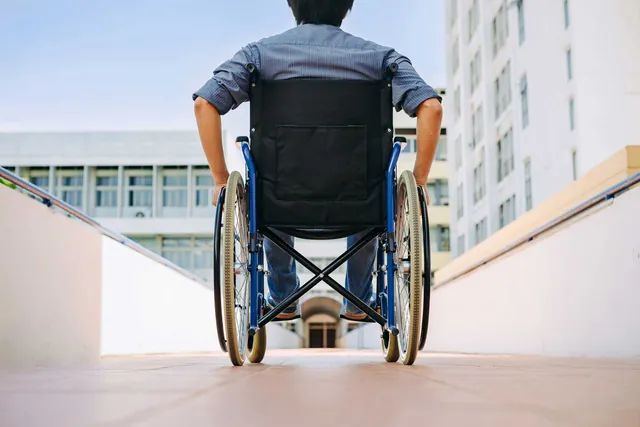
Law 13/1989 and the removal of architectural barriers: results and limitations
Answers the question: What has Law 13/1989 achieved, and where has it stopped short?
In thirty-seven years Legge 13 has brought ramps and lifts, but practice has applied mostly its measurements, leaving orientation and perception behind. What the law and Ministerial Decree 236 require, what the data say, and why we propose rules that make the result mandatory and leave the choice of means open.
-
 Standards and value · Guide · 6 min
PEBA plans in Lombardy: the regional guidelines through a Design for All lens
Answers the question: What do Lombardy’s guidelines require for PEBA plans?
With Regional Government Resolution (DGR) XI/5555 of 2021, Lombardy asked municipalities for PEBA plans that are participatory from the outset, explicitly adopting the Design for All approach. What the plan is, what the guidelines say, what funding the Region has provided and how to work on a PEBA that starts from people.
Products and spaces 6 articles
-
Products and spaces · Essay · 5 min
“Anche per me”: an accessible, inclusive bathroom in 5.5 square metres
Answers the question: How do you design a bathroom for everyone in 5.5 square metres?
A double washbasin, an open shower with two seats, just three grab rails: a home bathroom that does not look like a “disabled bathroom”. The Prime washbasin, the floor-standing WC and DM 236/1989, contrast and light, the feature in Il Bagno Oggi e Domani and INOUT 2026.
-
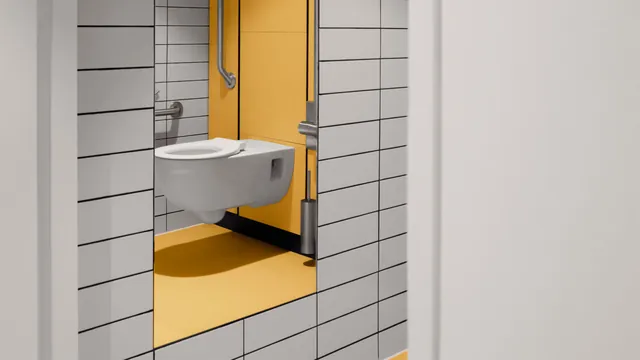
 Products and spaces · Essay · 8 min
The inclusive bathroom as a system: the Design for All approach
Answers the question: Why should an inclusive bathroom be designed as a system?
A bathroom that meets the regulations is not yet a bathroom people want to use: thresholds, heights, controls and light work only if they are designed together. Italian regulations and their limits, level-access showers, adjustable systems, discreet technology and the test case of “Anche per me” (‘For me too’).
-

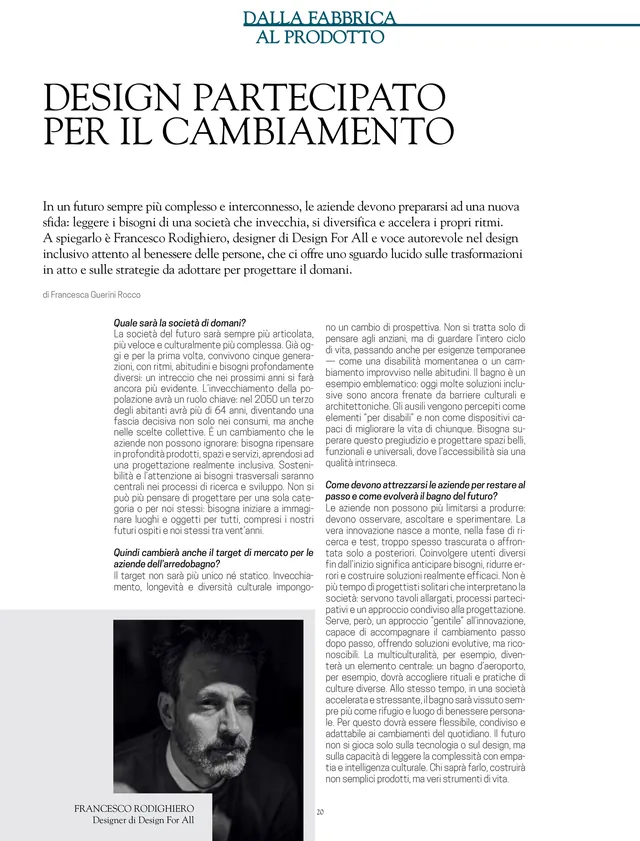 Products and spaces · Interview · 3 min
Participatory design for change: Francesco Rodighiero in Il Bagno Oggi e Domani
Answers the question: How does design change when people take part?
A society of five generations that is ageing rapidly can no longer be designed for a single category of people. Francesco Rodighiero’s interview in Il Bagno Oggi e Domani, the updated demographic data and the role of participatory design in companies’ research and development.
-
 Products and spaces · Essay · 7 min
Accessible architecture: innovation and inclusion in public and private spaces
Answers the question: How do you design accessible architecture that goes beyond the regulations?
Italian law sets a minimum threshold, which also covers wayfinding and the recognisability of places; quality of use is designed on top of it. The rules for private and public buildings, the shift from accessibility to inclusion, six design principles and three projects of very different kinds.
-
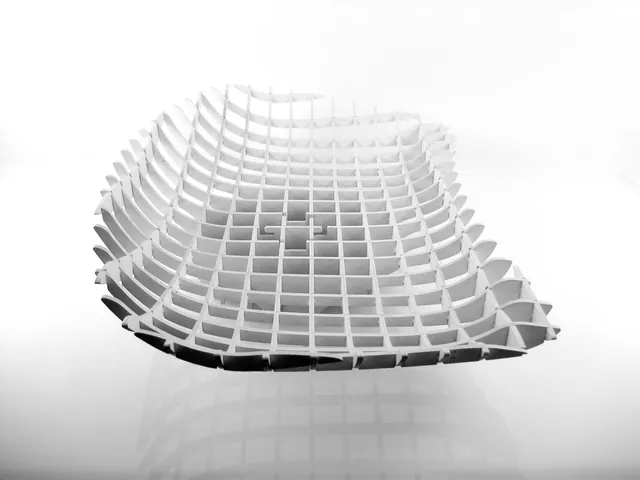 Products and spaces · Essay · 6 min
Accessibility and inclusive design: how to innovate in product design
Answers the question: How can accessibility drive product innovation without giving the product a clinical look?
-
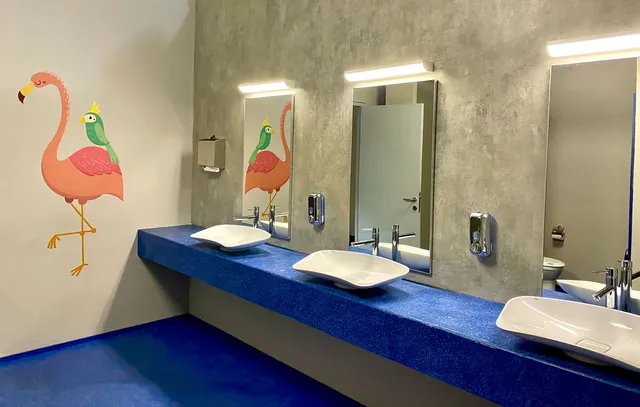
 Products and spaces · News and events · 3 min
The Prime washbasin on the set of “Lea – Un nuovo giorno”
Answers the question: What does a washbasin on the set of a television series tell us?
Prime, an accessible washbasin that does not look like an aid, appears in the paediatric ward of a Rai 1 series. We look at what the set makes visible, what the product is, and why installation matters as much as design.
Culture and tourism 5 insights
-
Culture and tourism · Interview · 2 min
Bologna Civic Museums: the need before the building
Answers the question: Why should an accessibility plan start from needs rather than from the building?
In MuseoOggi, Francesco Rodighiero describes the process Design for All Italia carried out for the Bologna Civic Museums, on which he worked directly. From listening to decisions: the role of needs in shaping the project.
-
 Culture and tourism · Essay · 4 min
Design challenges and flexibility: reflections on designing for accessibility
Answers the question: Why is flexibility the real challenge of accessible design?
An accessible cultural space is not finished once and for all: exhibitions, audiences and languages change. Francesco Rodighiero’s video lecture for the Scuola nazionale del patrimonio (Italy’s National School of Heritage) treats flexibility as a design skill, covering communication, wayfinding, mediation and an example from the Bologna Civic Museums (Musei Civici di Bologna).
-
 Culture and tourism · Essay · 6 min
Cultural accessibility: visible and invisible barriers in cultural venues
Answers the question: Which barriers, visible and invisible, keep people away from cultural venues?
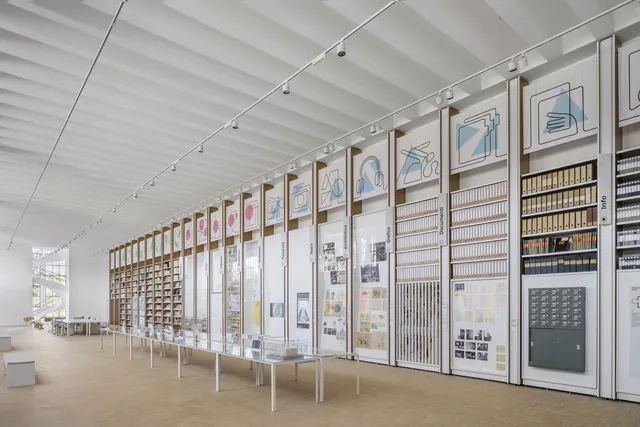
Museums, archives and libraries seem open to everyone, yet steps, texts, costs, opening hours and relationships can keep many people out. This article looks at the kinds of barrier examined in our lecture for Italy’s National School of Heritage, from physical to relational, and at why cultural accessibility needs a single, coordinated design.
-
 Culture and tourism · Essay · 7 min
Accessible museums and Design for All: towards a new alliance between culture, people and design
Answers the question: How can a museum become accessible to all its visitors?
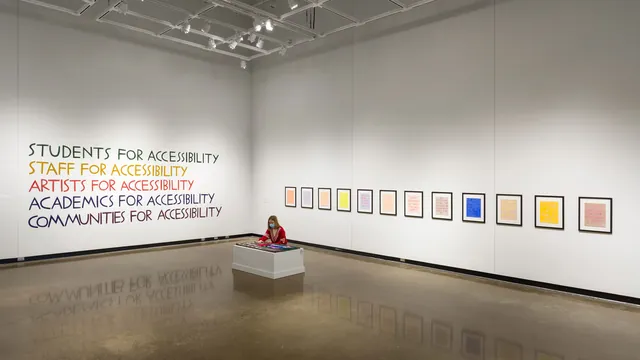
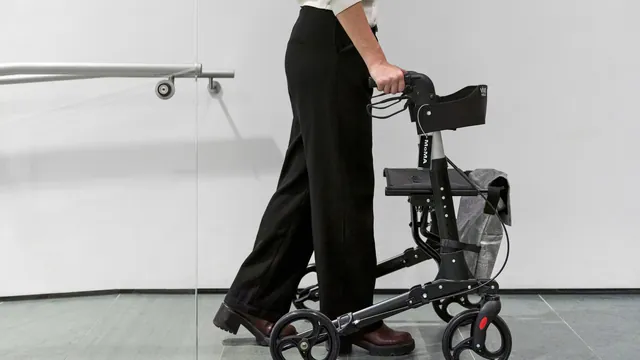
A museum is accessible when every person can plan their visit, find their way, understand its collections and feel welcome: physical barriers are only part of the picture. The case of Bologna’s 12 civic museums, the process from Co-Design to guidelines, the legislation in force and where to begin.
-
 Culture and tourism · Essay · 6 min
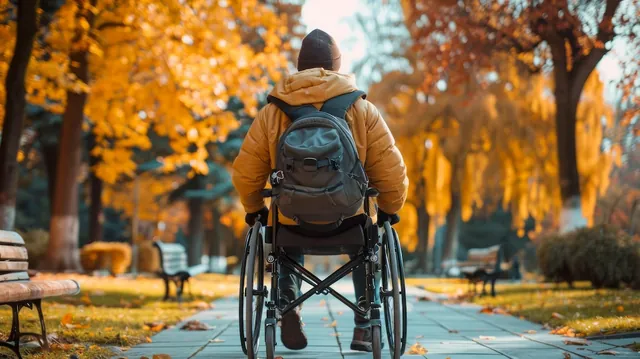
Accessible tourism: accessibility and inclusion in tourist and holiday destinations
Answers the question: What really makes a holiday destination accessible?
Accessible tourism accounts for 8.2% of overnight stays in Italy, but treating a reference practice as a tick-box list is not enough to make it a reality. Data published in 2026, standards and funding, the limits of the UNI/PdR 131:2023 checklists, and the design of rooms, bathrooms and routes that people choose.
A–Z index
The ABC of inclusive design: the words that recur in our texts, and the passages where they turn into design.
A
- Accessible tourism
- Accessible tourism: accessibility and inclusion in tourist and holiday destinations — section ‘Standards and tools: UNI/PdR 131:2023, Bandiera Lilla, funding’Italy is moving towards more accessible tourism by improving staff training, adapting facilities and …
- Architectural barriers
- Law 13/1989 and the removal of architectural barriers: results and limitations — section ‘What financial support is available in 2026 for removing architectural barriers?’
- Design for All in design practice: an interview with Francesco Rodighiero — section ‘4. How has “barrier-free” design evolved over the years?’Certainly over the last twenty years much more attention has been paid to architectural barriers, even though removing them solves only part of the ‘problem’.
B
- Bathroom
- The inclusive bathroom as a system: the Design for All approach — section ‘Adaptive systems: when the bathroom transforms’… making height adjustment a permanent quality of the bathroom system rather than an exceptional add-on.
- “Anche per me”: an accessible, inclusive bathroom in 5.5 square metres — section ‘An accessible bathroom in 5.5 square metres’The aim is an accessible bathroom that does not look like a “disabled bathroom”.
- Participatory design for change: Francesco Rodighiero in Il Bagno Oggi e Domani — section ‘Research and development in companies’… in September–October 2026 the same magazine published “Anche per me” (‘For me too’), an accessible and inclusive bathroom born of a process of listening and participation.
- Accessible tourism: accessibility and inclusion in tourist and holiday destinations — section ‘Design for All for hospitality venues’… designing the room, the bathroom, the beach or the visitor route so that …
- The Prime washbasin on the set of “Lea – Un nuovo giorno” — section ‘How to install an accessible washbasin’… a detail that cannot be seen on screen, but which in a real bathroom matters as much as the product.
- Beauty and aesthetics
- Design for accessibility and beauty — section ‘6. Ten criteria for designing beautiful aids’
- Inclusive design: the Design for All approach on Radio Canale Italia — section ‘When accessibility enhances aesthetics’On the supposed conflict between function and aesthetic quality, Rodighiero cited the washbasin developed for the hotel sector
- The inclusive bathroom as a system: the Design for All approach — section ‘Beauty and inclusion: a mature convergence’For a long time it was believed that accessibility and beauty belonged to two separate registers
C
- Co-Design
- “Anche per me”: an accessible, inclusive bathroom in 5.5 square metres — section ‘ Co-Design in the issue’s editorial’Cristina Mandrini’s editorial opens the issue under the title “Il Co-Design è un messaggio sociale” [‘Co-Design is a social message’].
- Inclusive design: the Design for All approach on Radio Canale Italia — section ‘Co-Design and flexibility over time’… on how present and future needs can be gathered, Rodighiero pointed to Co-Design as the most effective tool for turning the experience and expertise of …
- Accessible museums and Design for All: towards a new alliance between culture, people and design — section ‘What we learned: from Co-Design to inclusive governance’
- Accessibility and inclusive design: how to innovate in product design — section ‘The process: from Co-Design to prototype’Co-Design involves them at the start, when form, materials and interaction are still to be …
- Comfort
- On ergonomics: from holistic ergonomics to Design for All — section ‘When a product can be called ergonomic’… in testing these prototypes, giving valuable feedback on their experience of use, comfort and ease of interaction through interviews, usability tests and questionnaires …
- Cultural accessibility
- Cultural accessibility: visible and invisible barriers in cultural venues — section ‘Organisational barriers: what cannot be seen’Cultural accessibility depends not only on spaces and technologies, but on the quality …
D
- D.M. 236/1989
- “Anche per me”: an accessible, inclusive bathroom in 5.5 square metres — section ‘The floor-standing WC and DM 236/1989’For transfer from a wheelchair, DM 236/1989 requires the front edge of the bowl to be 75–80 cm …
- Law 13/1989 and the removal of architectural barriers: results and limitations — section ‘Ministerial Decree 236/1989 and Presidential Decree 503/1996: private and public’While Law 13/89, with Ministerial Decree 236/89, set the accessibility requirements for private buildings, the …
- Dignity
- Design for accessibility and beauty — section ‘4. Dignity as an unquantifiable variable.’Because it puts people’s dignity first, and tests with people rather than against a list …
- The phenomenology of exclusion: Design for All as a contemporary approach to design — section ‘Why Design for All is something else’… proposed by this discipline cannot measure respect for human dignity, because it cannot be measured with purely objective parameters.
- Disability language
- “The disabled”, “differently abled”, people with disabilities: it is not just a matter of language — section ‘The UN Convention and Italian law’… such as the United Nations with the “UN Convention on the Rights of Persons with Disabilities”, adopted by the General Assembly on 13 December 2006.
- Law 13/1989 and the removal of architectural barriers: results and limitations — section ‘Ministerial Decree 236/1989 and Presidential Decree 503/1996: private and public’… Italy’s national milestones in removing architectural barriers and including people with disabilities.
E
- Ergonomics
- On ergonomics: from holistic ergonomics to Design for All — section ‘What ergonomics is’In its principal aim, contemporary ergonomics seeks to optimise the interaction between people and systems …
- Design for All, Inclusive Design, Universal Design: design approaches compared — section ‘How do they relate to ergonomics?’Ergonomics studies the interactions between people and the other elements …
- European Accessibility Act
- European Accessibility Act: what really changes for companies in product design — section ‘What the EAA requires and how Italy has transposed it’The European Accessibility Act (Directive (EU) 2019/882) requires manufacturers, importers and distributors of the products and …
- The ROI of accessibility: the economic dividend of Design for All — section ‘The digital profit and loss account: revenue, costs and risk’… since 28 June 2025 the European Accessibility Act (EAA) has applied to products and services (including e-commerce and mobile)
F
- Flexibility
- Design challenges and flexibility: reflections on designing for accessibility — section ‘Flexibility as a design skill’According to Rodighiero, flexibility is a design skill, not simply a technical feature.
- Inclusive design: the Design for All approach on Radio Canale Italia — section ‘Co-Design and flexibility over time’… the speed of social and technological change, the studio pursues flexible design solutions that can adapt with minimal intervention
- Cultural accessibility: visible and invisible barriers in cultural venues — section ‘Spaces that transform: appropriation, flexibility and everyday life’Architectural and functional flexibility thus becomes a fundamental tool for welcoming …
G
- Guidelines
- PEBA plans in Lombardy: the regional guidelines through a Design for All lens — section ‘The Lombardy Region guidelines (DGR 5555/2021)’XI/5555, the Lombardy Region adopted new regional guidelines for drawing up PEBA plans.
- Accessible museums and Design for All: towards a new alliance between culture, people and design — section ‘The case: guidelines for the Bologna Civic Museums’The outcomes are the design guidelines and the Plans for the Elimination of Architectural Barriers (PEBA) …
- Design for All Process: the Florence event of 17 October 2026 — section ‘Twelve civic museums, one way of looking’… staff training, Co-Design sessions with communities, accessibility guidelines.
I
- Inclusive Design
- Design for All, Inclusive Design, Universal Design: design approaches compared — section ‘Inclusive Design: the Design Council principles’Inclusive Design is the approach closest to Design for All
- Accessible architecture: innovation and inclusion in public and private spaces — section «From accessibility to inclusion: Design for All and Inclusive Design»Design for All and Inclusive Design shift the question
- Accessibility and inclusive design: how to innovate in product design — section ‘Design for All and Inclusive Design in products: two approaches’Inclusive Design, which originated in the United Kingdom, designs mainstream products and services …
- Invisible barriers
- Cultural accessibility: visible and invisible barriers in cultural venues — section ‘Organisational barriers: what cannot be seen’
L
- Law 13/1989
- Law 13/1989 and the removal of architectural barriers: results and limitations — section ‘What Law 13/1989 provides’In Italy, Law 13/89 is a fundamental pillar for the removal of architectural …
M
- Museums
- Accessible museums and Design for All: towards a new alliance between culture, people and design — section ‘The case: guidelines for the Bologna Civic Museums’The work for the Bologna Civic Museums was carried out by Design for All Italia …
- Bologna Civic Museums: the need before the building — section ‘Understanding before prescribing’… gallery texts and the organisation of the visit also become part of a museum’s accessibility.
- Design for All Process: the Florence event of 17 October 2026 — section ‘Twelve civic museums, one way of looking’The first talk on the programme was a preview of the publication on the Bologna Civic Museums.
P
- PEBA
- PEBA plans in Lombardy: the regional guidelines through a Design for All lens — section ‘What a PEBA is’PEBA stands for “Piano per l’eliminazione delle barriere architettoniche”, the Plan for the Elimination of Architectural Barriers.
- Accessible architecture: innovation and inclusion in public and private spaces — section ‘What Italian regulations require’Public authorities are also required to draw up Plans for the Elimination of Architectural Barriers (PEBA), introduced by Art.
- People with sensory disabilities
- Accessible architecture: innovation and inclusion in public and private spaces — section ‘Are the regulations only about dimensions?’… orientation and the recognition of places, particularly for blind, partially sighted and deaf people.
- PNRR
- Design for All and Italy’s Recovery Plan (PNRR): what remains for accessibility — section ‘The PNRR in brief: resources and deadlines’In this context, Italy’s National Recovery and Resilience Plan (PNRR) is a crucial opportunity to transform places and …
- Population ageing
- The phenomenology of exclusion: Design for All as a contemporary approach to design — section ‘Ageing: the numbers’It should be said first that the definition of an “older person” as such is vague and elastic
- Participatory design for change: Francesco Rodighiero in Il Bagno Oggi e Domani — section ‘A more complex, older society’Population ageing is, in the designer’s view, one of the most …
- The inclusive bathroom as a system: the Design for All approach — section ‘Designing for human variability’… by 2050 one in six people in the world will be over 65, while the WHO notes that by the same date the population …
- European Accessibility Act: what really changes for companies in product design — section ‘From compliance to competitive advantage: the role of Design for All’If we include older people (on 1 January 2025, 22.0% of the EU population was …
- The ROI of accessibility: the economic dividend of Design for All — section ‘Why now: latent demand and macroeconomic drivers’On 1 January 2025, 22% of the EU population was aged 65 or over, and Italy, at 24.7%, is the …
- Prototypes and testing
- Accessibility and inclusive design: how to innovate in product design — section ‘The process: from Co-Design to prototype’… each prototype goes back to the people and changes the concept, until the dialogue …
R
- ROI and economic value
- The ROI of accessibility: the economic dividend of Design for All — section ‘How to measure the ROI of Design for All’The ROI of Design for All is structured around five main dimensions, which …
S
- Stockholm Declaration
- Design for All, Inclusive Design, Universal Design: design approaches compared — section ‘Design for All: the Stockholm Declaration and the participatory process’Since the 2004 Stockholm Declaration, Design for All has been defined as design for …
U
- UN Convention on the Rights of Persons with Disabilities
- “The disabled”, “differently abled”, people with disabilities: it is not just a matter of language — section ‘The UN Convention and Italian law’… made by major governmental bodies such as the United Nations with the “UN Convention on the Rights of Persons with Disabilities”, adopted by the General Assembly on 13 …
- Universal Design
- Design for All, Inclusive Design, Universal Design: design approaches compared — section ‘Universal Design: the seven principles of 1997’Universal Design is widely used in the United States and Australia …
- Design for All and Wikipedia: why it is not Universal Design — section ‘What Wikipedia says today (checked in October 2026)’Comparing or equating Design for All with Universal Design is wrong precisely because they are profoundly different design approaches.
- The phenomenology of exclusion: Design for All as a contemporary approach to design — section ‘Universal Design: an encounter in 2009’… for a company (Goman), and my research had repeatedly come across Universal Design and its applications.
W
- Washbasin
- The Prime washbasin on the set of “Lea – Un nuovo giorno” — section ‘Why a non-clinical washbasin on the set of a medical drama’Many washbasins for healthcare settings use the shapes and …
- “Anche per me”: an accessible, inclusive bathroom in 5.5 square metres — section ‘The Prime washbasin’The first element is the Prime countertop washbasin by Goman, in white Politek, which brings …
- The ROI of accessibility: the economic dividend of Design for All — section ‘Physical products and packaging: when “inclusive” means “premium”’… solutions such as height-adjustable washbasins or integrated seating, developed from ergonomic analysis, become …