InsightsProducts and spacesNews and events
What does a washbasin on the set of a television series tell us?
The Prime washbasin on the set of “Lea – Un nuovo giorno”
Prime, an accessible washbasin that does not look like an aid, appears in the paediatric ward of a Rai 1 series. We look at what the set makes visible, what the product is, and why installation matters as much as design.
· updated 3 min read
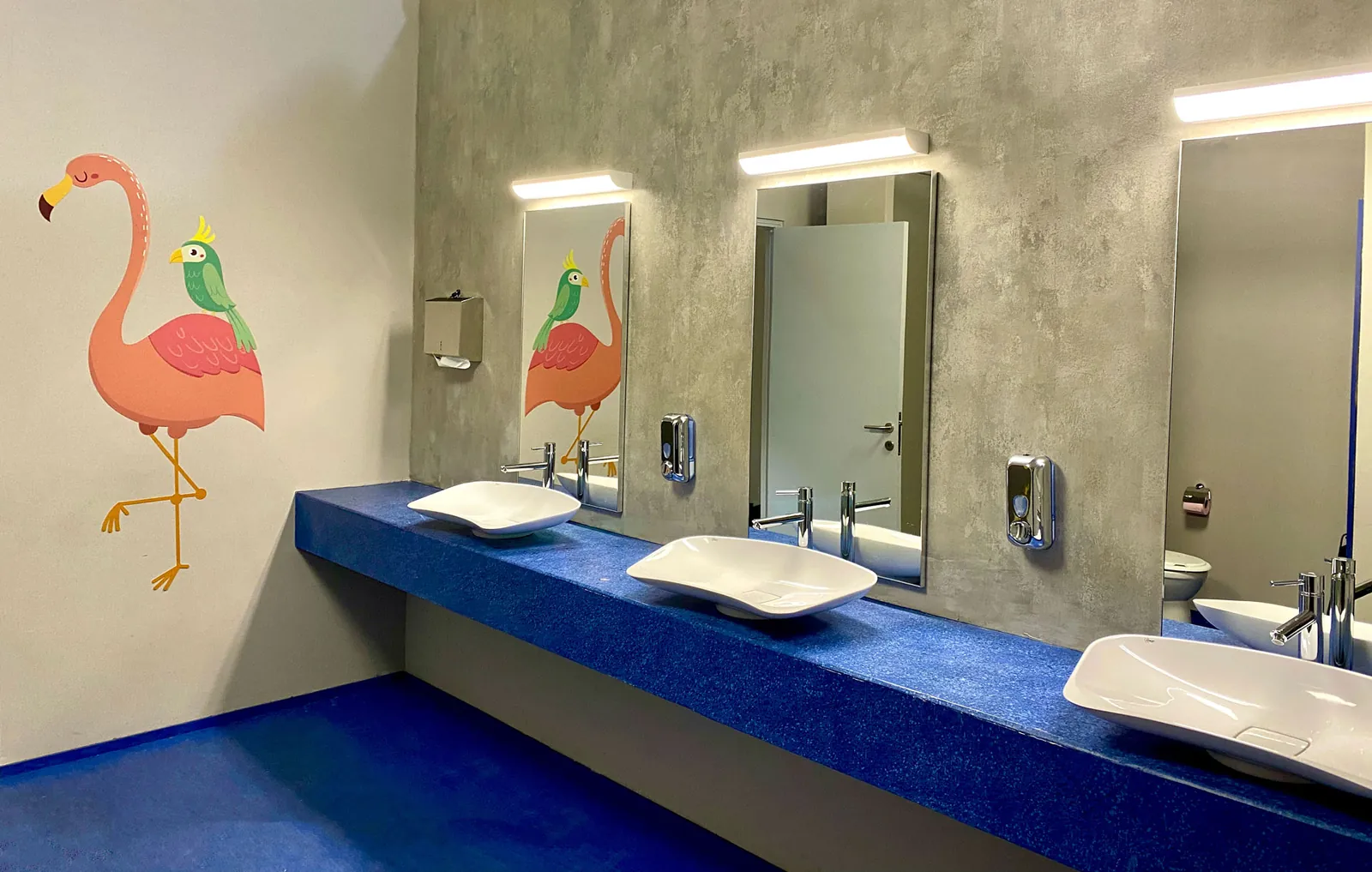
“Lea – Un nuovo giorno (opens in a new tab)”, a television series set in a paediatric ward, aired on Rai 1 over four prime-time evenings (opens in a new tab) from 8 February to 1 March 2022. Its set was fitted with Goman’s Prime washbasin, designed by Francesco Rodighiero. It is an accessible washbasin, with an integrated elbow rest and clear space underneath for a frontal approach in a wheelchair. It was selected for the ADI Design Index 2019 and received the Design for All Quality Mark from the Design for All Italia association (opens in a new tab) in 2018. In a fictional hospital ward, then, there is a washbasin that meets specific needs without adopting the clinical language of an aid: for us, this is what counts.

Why a non-clinical washbasin on the set of a medical drama
We have not heard from the production about the reasons for their choice, and we do not speculate. What we do know is what it makes visible. Many washbasins for healthcare settings use the shapes and materials of medical equipment, marking the people who use them as patients before they are seen as people.
The set shows a bathroom with innovative, expressive elements of Italian design, in which accessibility is present but does not announce itself. This is the thesis we work on: accessibility, when it is designed in from the start, becomes a quality of use rather than a mark of difference.
What Prime is
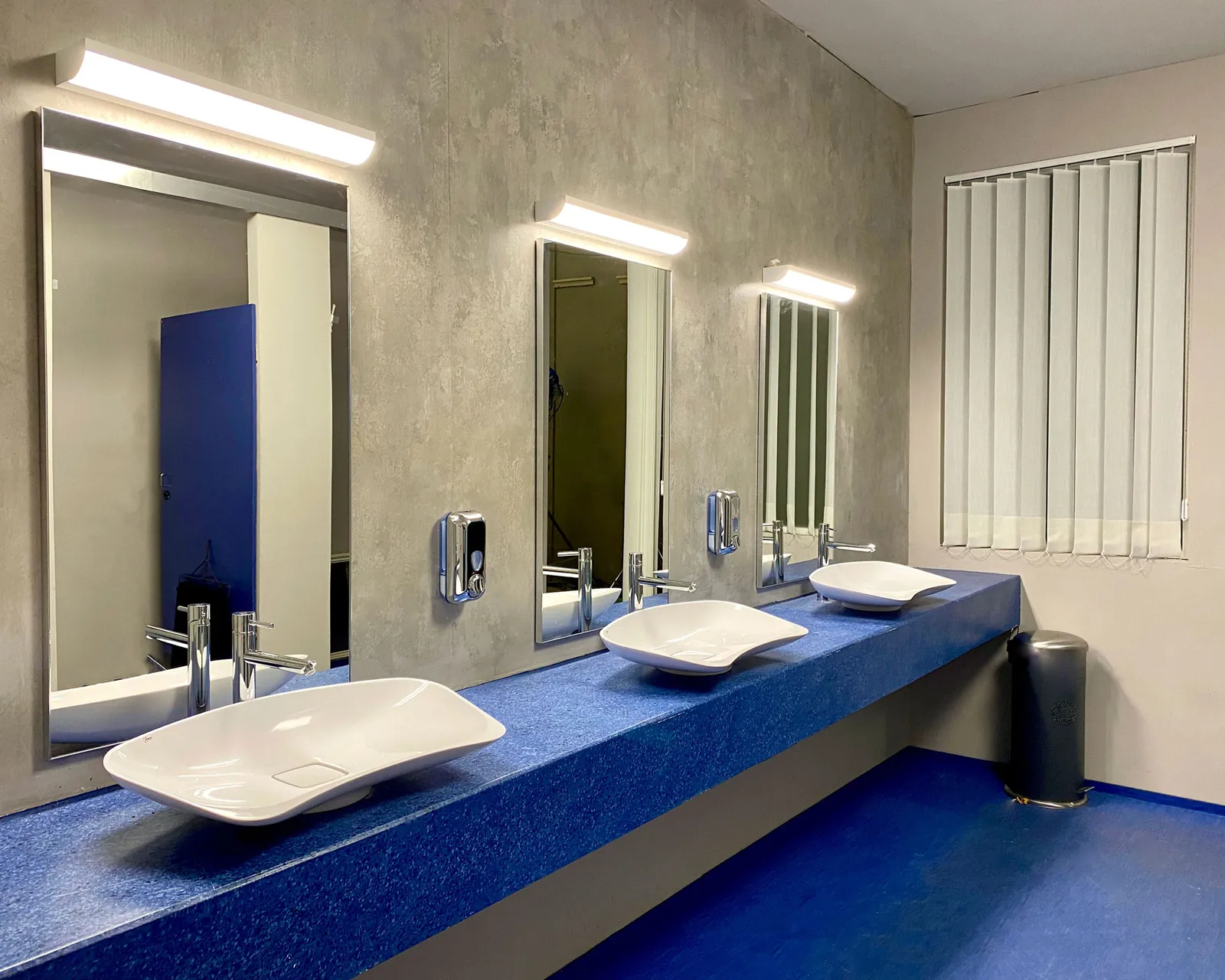
Prime is a countertop washbasin in white Politek, produced by Goman and designed by Francesco Rodighiero. It is based on research into how washbasins are actually used: the integrated elbow rest offers support to those who need it, the clear space underneath allows a frontal approach in a wheelchair, and the design language remains that of a domestic washbasin.
It meets specific needs, but it belongs in any bathroom: the “Anche per me” (“For me too”) project, an accessible and inclusive 5.5 m² bathroom, shows this too.
How to install an accessible washbasin
Building the set involved fitting three countertop washbasins, with mixer taps chosen and recommended by the washbasin’s manufacturer: Goman (opens in a new tab) supplied the items requested by the production team, whom we thank for their courtesy. The installation, however, is not entirely correct: a detail that cannot be seen on screen, but which in a real bathroom matters as much as the product itself.
Point 8.1.6 of Ministerial Decree (DM) 236/1989 (opens in a new tab) requires the top of the washbasin to be 80 cm from the floor, with no pedestal and with the trap preferably set close to or recessed into the wall, so that knees and wheelchair have room underneath. Prime is designed to meet these conditions without advertising them: it works for people who approach in a wheelchair, for people who need to rest their elbows, and for everyone else.
The argument for the bathroom as a system, of which a washbasin is only one part, is developed in the article The inclusive bathroom as a system. For developing products and spaces with Design for All and Inclusive Design, the consultancy page describes how we work.
In our projects
Read next
- Essay“Anche per me”: an accessible, inclusive bathroom in 5.5 square metresHow do you design a bathroom for everyone in 5.5 square metres?
- EssayThe inclusive bathroom as a system: the Design for All approachWhy should an inclusive bathroom be designed as a system?
- InterviewParticipatory design for change: Francesco Rodighiero in Il Bagno Oggi e DomaniHow does design change when people take part?
An aid that does not announce itself
Washbasins, bathrooms and care spaces: we design solutions with people in which accessibility becomes a quality of use.