InsightsCulture and tourismEssay
What really makes a holiday destination accessible?
Accessible tourism: accessibility and inclusion in tourist and holiday destinations
Accessible tourism accounts for 8.2% of overnight stays in Italy, but treating a reference practice as a tick-box list is not enough to make it a reality. Data published in 2026, standards and funding, the limits of the UNI/PdR 131:2023 checklists, and the design of rooms, bathrooms and routes that people choose.
· updated 6 min read
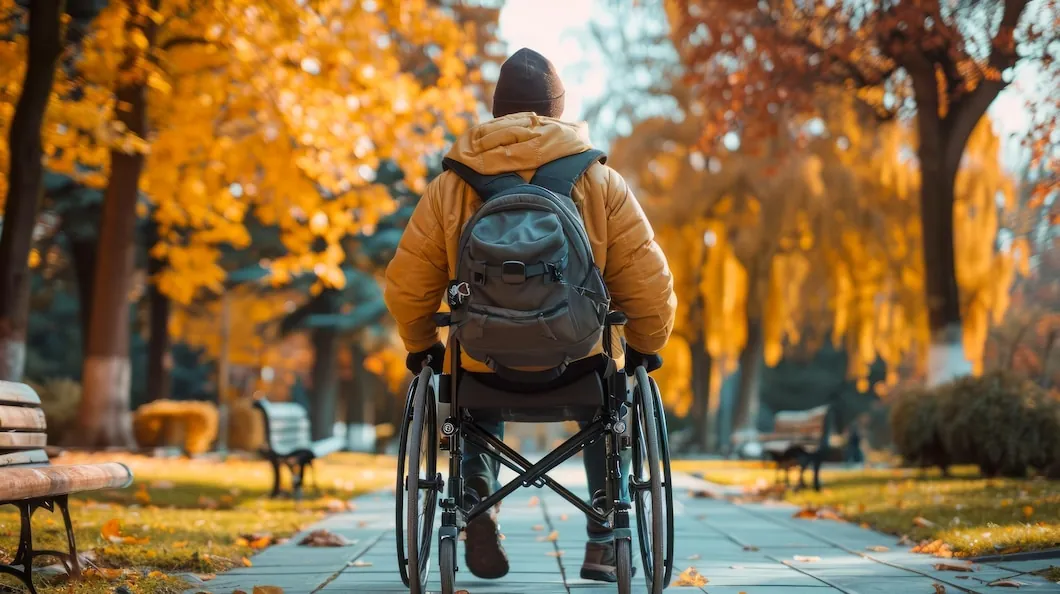
Accessible tourism is the set of places, facilities and services that allow anyone to travel and stay independently, safely and comfortably: people with disabilities, older people, families with young children, people with specific dietary needs or with a temporary limitation. It is not a niche: according to a study by SRM published in February 2026, it accounts for 8.2% of tourist overnight stays in Italy.
In a country as rich in cultural heritage and natural beauty as Italy, the challenge of accessible tourism is an opportunity to reaffirm a commitment to sustainable and responsible tourism. In recent years, numerous initiatives and regulations have laid the foundations for change, aiming to remove architectural barriers and promote tourism services accessible to everyone, with and without disabilities. Yet the road to accessibility and inclusion “for All” is still long, and requires a joint commitment from public bodies, industry operators and local communities.
What it is worth: the data
According to the study by SRM, the research centre linked to the Intesa Sanpaolo Group, published on 26 February 2026, accessible tourism generates 8.8 million arrivals and 38.4 million overnight stays in Italy, equal to 8.2% of national overnight stays. Its economic impact is €5.3 billion in direct terms, rising to €9.6 billion including indirect and induced effects. The same study finds that only 9% of tourism services in Europe are fully accessible.
Potential demand is broader than expressed demand: around 90 million people with disabilities live in the European Union, and in Italy 24.7% of the population is aged 65 or over (data from the Council of the EU and Eurostat). These figures describe potential demand, not the number of travellers: they indicate how far the market can grow, not how much any single venue will earn.
For those who design and run hospitality venues, it is an economic opportunity even before it is an obligation, as the return on investment in accessibility also shows.
Regulations and tools: UNI/PdR 131:2023, Bandiera Lilla, funding
Italy is moving towards more accessible tourism by improving staff training, adapting facilities and making information reliable: knowing before departure what you will find is the first condition for choosing independently.
A participatory approach to designing spaces and services is essential: interaction between stakeholders and the people who will use the places, with and without disabilities, is crucial for developing truly inclusive solutions. Collaboration stimulates innovation, encouraging the adoption of universal accessibility standards, supported by dedicated public funding and by the UNI/PdR 131:2023 reference practice.
The decree of 1 August 2024 allocated €50 million from the Single Fund for the Inclusion of People with Disabilities to the Regions for accessible tourism projects.
The Piano strategico del turismo 2023-27 (opens in a new tab) (Italy’s Strategic Tourism Plan) stresses the importance of accessibility and tourist mobility, aiming to improve both physical and digital access to points of interest, with the goal of increasing Italy’s tourism competitiveness on the international market. Local initiatives, such as the Bandiera Lilla (opens in a new tab) (Lilac Flag) project, recognise and reward municipalities committed to promoting accessible tourism, reflecting a growing commitment to inclusion at community level.
The limits of checklists
The UNI/PdR 131:2023 (opens in a new tab), “Accessibilità dei servizi offerti da strutture ricettive, stabilimenti termali e balneari, e impianti sportivi – Requisiti e check-list” (accessibility of services offered by guest accommodation, spas, beach facilities and sports facilities – requirements and checklists), published on 9 March 2023, is a reference practice: a voluntary instrument that becomes binding only when a regulation or call for funding refers to it, and that can serve as the basis for certifying venues. It includes requirements, checklists and guidance for the verification and certification of services, and states that it integrates the Design for All approach.
The problem is not the reference practice, but the way it is used. A checklist measures whether a requirement is present, not the quality of the experience: a room can satisfy every item and still be a place nobody would choose. Applied as a tick-box list, the requirements, however reasonable, restrict the expressive freedom of design and add to the bureaucratic burden, with a weight that discourages precisely the smallest venues.
Design has to hold together the whole journey the guest actually experiences: information before booking, arrival, the room, the bathroom, the beach, the services. The reference practice indicates what to check at each stage; Design for All decides how each stage becomes something people choose, not an adaptation that signals a difference.
Design for All for hospitality venues
 (opens in a new tab)
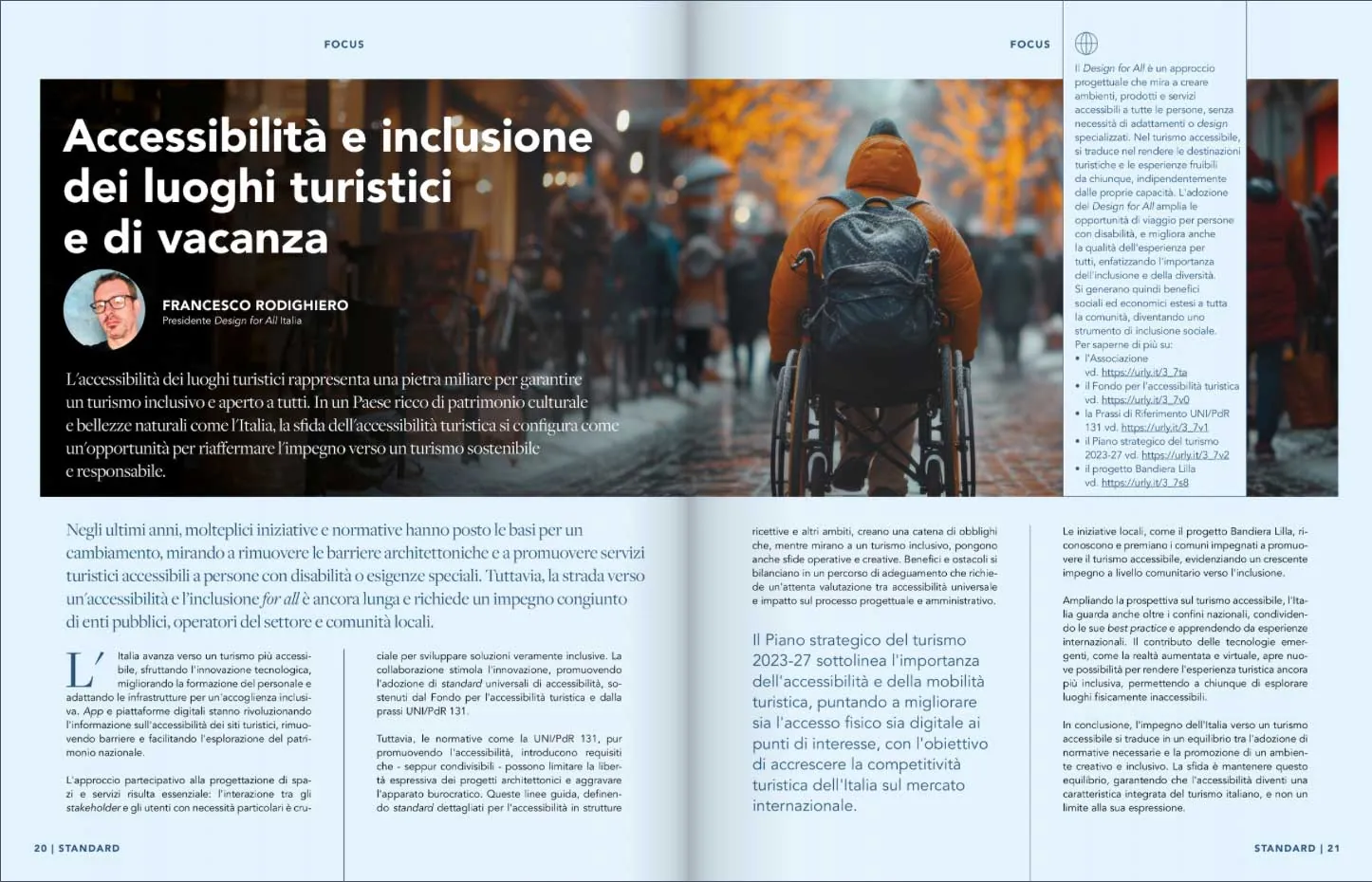
Design for All is “design for human diversity, social inclusion and equality” (EIDD, Stockholm Declaration, 2004); it is an approach distinct from Universal Design and Inclusive Design, with which it shares its goal. In accessible tourism, it means making tourist destinations and experiences usable by anyone, regardless of their abilities: designing the room, the bathroom, the beach or the visitor route so that the same solution is comfortable for everyone and desirable even for those who do not need it. Solutions people love, not adaptations that signal a difference.
In a hotel room this means, for example, a bathroom such as “Anche per me” (“For me too”), designed so that the same room is comfortable for whoever uses it; washbasins such as Prime and Flight, which meet the standards without looking like medical equipment; handles and grab rails such as Giotto and Shade, which offer safety with the design language of a furnishing accessory. The bathroom as a system is described in The bathroom as a contemporary inclusive system.
Adopting Design for All broadens travel opportunities for people with disabilities, and also improves the quality of the experience for all users, underlining the importance of inclusion and diversity. It therefore generates social and economic benefits that extend to the whole community, becoming a tool for social inclusion.
For existing or planned venues, the Design for All process starts by involving people and supports decisions from the concept stage onwards: this is the work of our Design for All and Inclusive Design consultancy. Further solutions are collected in our case studies.
Sources
- Turismo accessibile: leva strategica da 9,6 miliardi per l’Italia (opens in a new tab), Intesa Sanpaolo Research, SRM study (26 February 2026)
- Decreto 1° agosto 2024, riparto del Fondo unico per l’inclusione delle persone con disabilità (opens in a new tab), Italian Government
- UNI/PdR 131:2023 (opens in a new tab), AccessibleEU, European Commission
- The EIDD Stockholm Declaration (2004) (opens in a new tab), EIDD Design for All Europe
- Piano strategico del turismo 2023-2027 (opens in a new tab), Ministero del Turismo
- Bandiera Lilla (opens in a new tab)
In our projects
Read next
- EssayCultural accessibility: visible and invisible barriers in cultural venuesWhich barriers, visible and invisible, keep people away from cultural venues?
- Essay“Anche per me”: an accessible, inclusive bathroom in 5.5 square metresHow do you design a bathroom for everyone in 5.5 square metres?
- GuideThe ROI of accessibility: the economic dividend of Design for AllWhat is the return on investing in accessibility?
From information to the room
We work with hospitality businesses and destinations on the whole journey the guest experiences, so that every stage is something people choose, not an adaptation.