InsightsCulture and tourismEssay
Which barriers, visible and invisible, keep people away from cultural venues?
Cultural accessibility: visible and invisible barriers in cultural venues
Museums, archives and libraries seem open to everyone, yet steps, texts, costs, opening hours and relationships can keep many people out. This article looks at the kinds of barrier examined in our lecture for Italy’s National School of Heritage, from physical to relational, and at why cultural accessibility needs a single, coordinated design.
· updated 6 min read
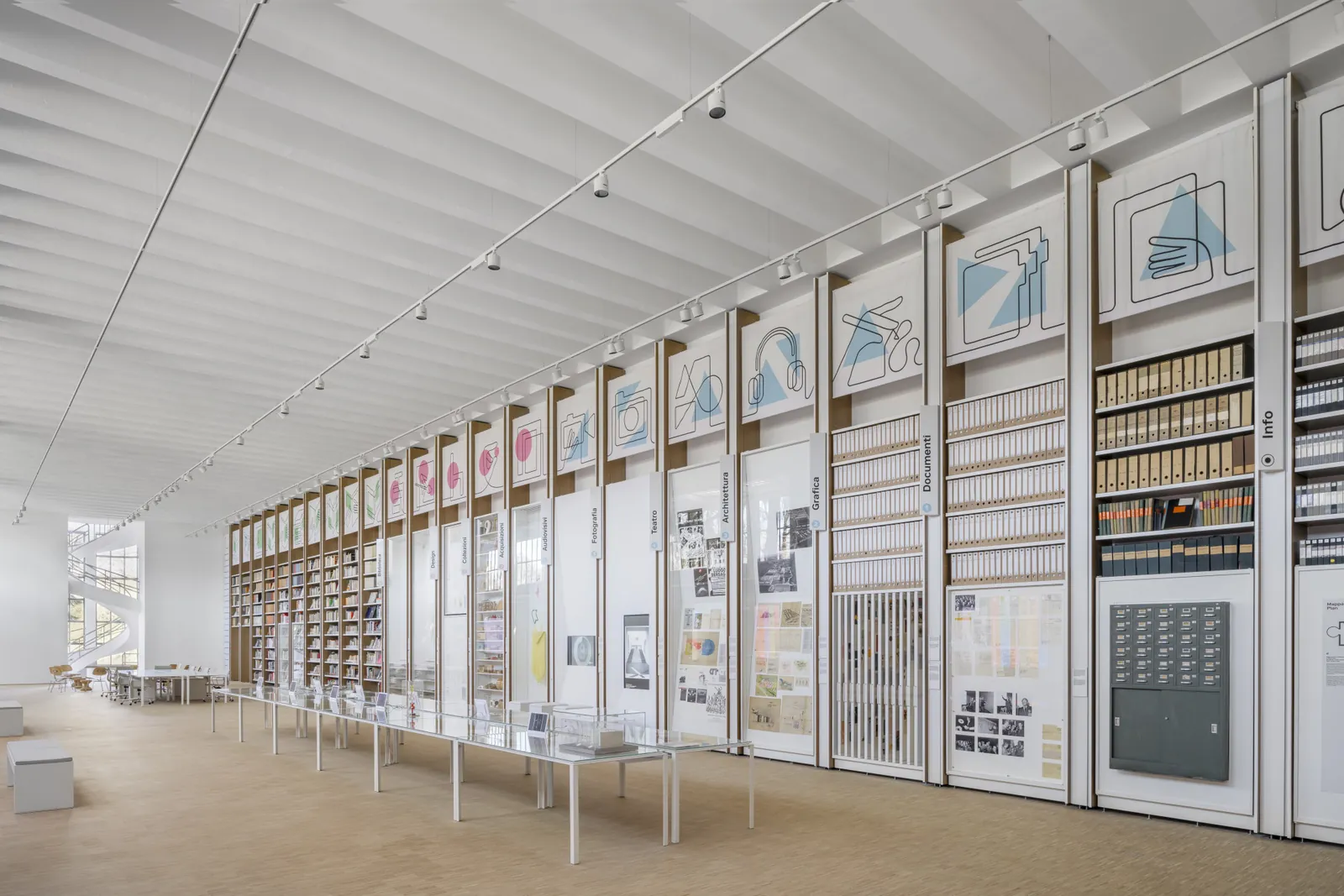
Cultural accessibility is the condition in which every person can reach a cultural venue, find their way around it, understand its content and feel entitled to be there. It concerns spaces, but also language, organisation, costs and relationships: that is why the barriers standing in its way are partly visible and partly invisible.
Cultural accessibility is not a set of technical requirements, nor a protocol to follow for the sake of compliance. It is a cultural and organisational process that involves the whole ecosystem of a cultural venue: its architecture, the ways people experience it, its communication, the skills of its staff and the relationships between people.
It is a transformation that requires vision, awareness and a design approach able to embrace the complexity of human diversity, such as Design for All and Inclusive Design.
The national course and the lecture
This perspective is at the heart of the national course “Accessibilità culturale: principi e pratiche” [‘Cultural accessibility: principles and practice’], promoted by the Scuola nazionale del patrimonio e delle attività culturali (opens in a new tab) (Italy’s National School of Heritage and Cultural Activities) with the Directorate-General for Museums, as part of the programme Personeper – Accessibilità nei luoghi della cultura (opens in a new tab) [‘Accessibility in cultural venues’]. The programme is funded by Italy’s National Recovery and Resilience Plan (PNRR) through NextGenerationEU; the Plan allocates €300 million to removing physical and cognitive barriers in museums, libraries and archives (M1C3, Investment 1.2).
Within this training programme, Francesco Rodighiero and Antonella Agnoli (opens in a new tab) created the lecture “Le barriere visibili e invisibili: comprendere il contesto per definire le soluzioni” [‘Visible and invisible barriers: understanding the context to define solutions’], a module that examines in depth the obstacles, tangible and intangible, that limit the full experience of cultural venues.
The five-hour course was delivered online and self-paced; the lecture was available on the School’s platform from 26 June to 31 October 2025.
Extract from the lecture “Le barriere visibili e invisibili: comprendere il contesto per definire le soluzioni”, with Francesco Rodighiero and Antonella Agnoli and sign language interpretation (no sound)
Recognising barriers beyond the obvious
A barrier can be a step, an incomprehensible text, a cost or a service that does not respond to people. Recognising it means observing how a place is reached, moved through and experienced.
In the collective imagination, museums, archives and libraries are seen as places naturally open to everyone. In reality, their accessibility is often limited by a constellation of barriers that interfere with how people experience them, find their way, understand what they see and feel that they belong.
Physical barriers
Physical barriers are the first level of obstacle: steps, inadequate ramps, unsuitable lifts, narrow passages, fragmented routes through the building. They affect not only people with mobility impairments but anyone facing a limitation, even a temporary one: parents with pushchairs, older people, visitors with reduced mobility.
Perceptual and sensory barriers
Then come perceptual and sensory barriers: wayfinding that does not guide, poor lighting, hard-to-read text, spaces with difficult acoustics. These affect everyone’s experience, not only that of people who are hypersensitive or hyposensitive to sensory input.
Technological barriers
Finally, technological barriers are an increasingly important dimension. QR codes that are the only way into the content, inaccessible digital interfaces, content that does not work with assistive technologies and a lack of digital literacy all create new forms of invisible exclusion.
Obvious as they are, these barriers are often tackled piecemeal, without an overall strategy. Cultural accessibility, by contrast, calls for a coordinated, person-centred design.
The symbolic threshold of cultural venues
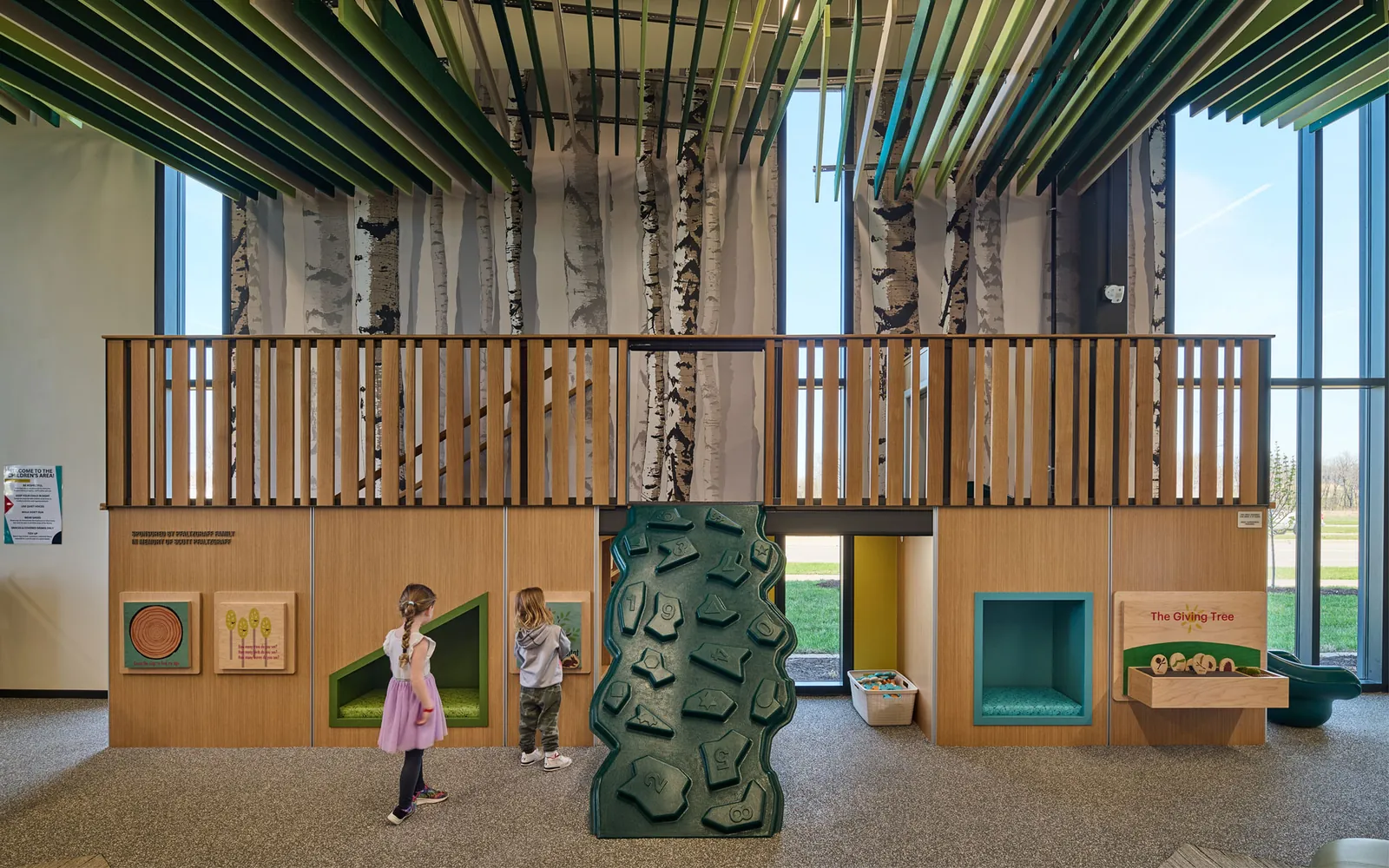
Many obstacles are less tangible but just as powerful. Cultural venues have a symbolic threshold that can convey distance or a sense of inadequacy.
The language used on panels, the complexity of the narratives, information designed for an educated or specialist audience, gallery layouts that suggest who belongs there and who does not: all these elements combine into a cultural barrier that is hard to break down.
These dynamics are subtle but decisive. They can turn a museum into a place perceived as elitist, or a library into a space that is “not for me”, despite its public mission.
The general programme of the Personeper pathway explores these themes: Personeper – Accessibilità nei luoghi della cultura (opens in a new tab). The course programme (opens in a new tab) (in Italian) lists all the lectures.
Organisational barriers: what cannot be seen
A significant part of the lecture addresses systemic barriers: the invisible obstacles created by organisational and management choices.
Opening hours that are limited or do not fit people’s daily lives, few flexible services, no staff dedicated to cultural mediation, staff not trained to welcome every visitor, a gap between what is promised online and what visitors find on site: all these factors shape the visitor’s experience profoundly.
Cultural accessibility depends not only on spaces and technologies, but on the quality of the processes that govern the life of a cultural institution.
In the process for the Bologna Civic Museums (Musei Civici di Bologna), more than 80 anonymous questionnaires gathered the views of in-house staff, external collaborators and volunteers, and accessibility was treated as a driver of cultural, organisational and design change: we describe it in Accessible museums and Design for All.
Social justice and economic barriers
Accessibility is also a question of resources. The cost of transport, educational services, workshop activities or technologies can be a significant obstacle for many people.
Designing inclusively means asking whether cultural experiences are affordable for the people who take part, and imagining fair, accessible ways for them to do so.
Equity is not an abstract principle: it is a concrete element of design that determines who will, and who will not, have access to culture.
Relational barriers: the most fragile dimension
The subtlest barriers, but perhaps the most decisive, are relational ones.
A lack of listening, difficulty in building trust, a sense of loneliness, no human support at critical moments: all of these have a decisive influence on access to culture.
Relationships are an essential component of cultural design. Without relationships, no place is truly accessible.
Investing in how visitors are welcomed, in cultural mediation and in community building creates real conditions for participation.
Spaces people can make their own: flexibility and everyday life
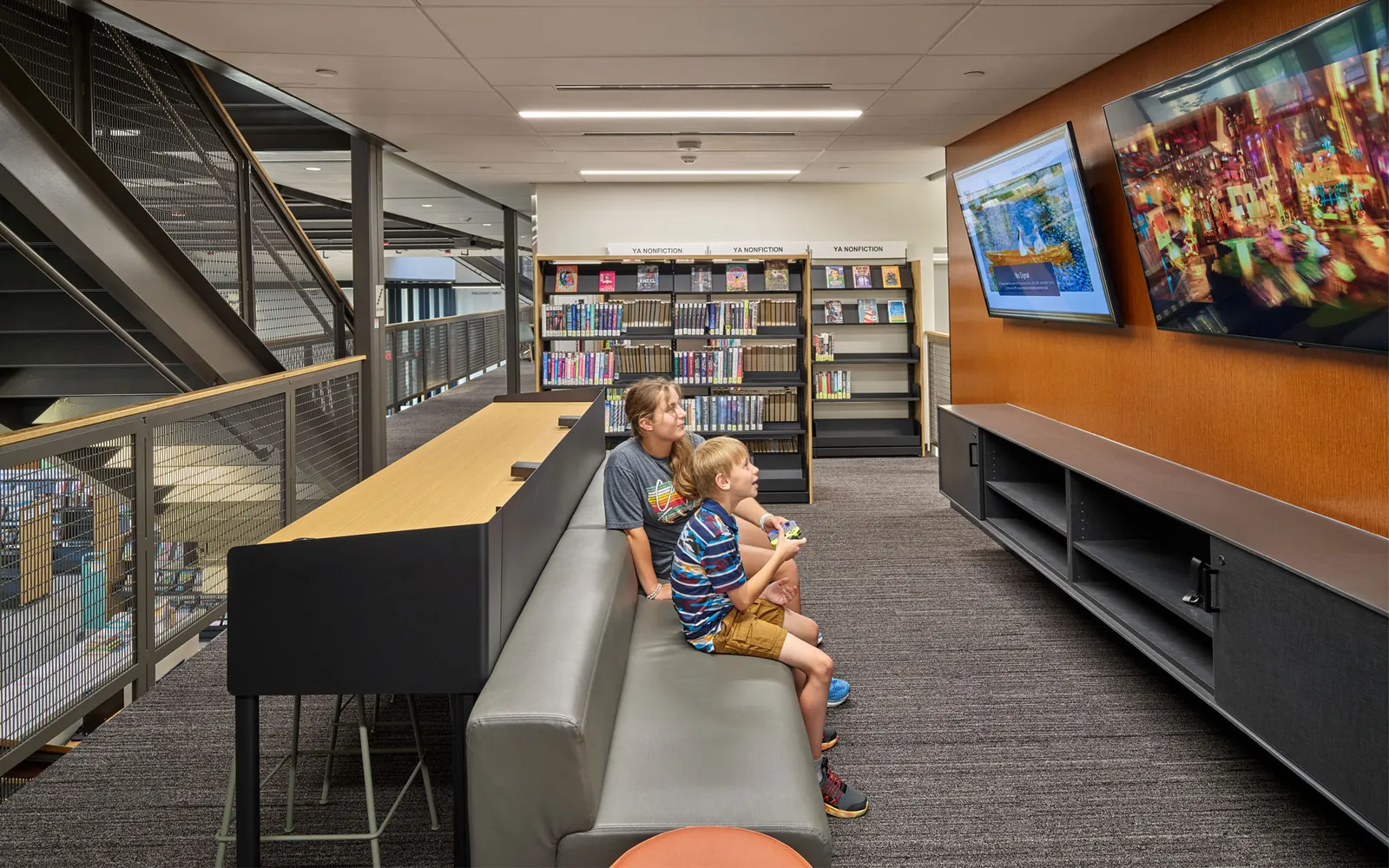
The European libraries analysed in the lecture, from Copenhagen to Barcelona, from Oslo to Whitechapel, show that the most inclusive cultural spaces are those able to adapt, transform and accommodate different ways of being there.
Places that let people linger, study, meet, observe, take part, rest.
Spaces that do not impose a posture or a behaviour, but offer freedom of use and room for people to make them their own. Architectural and functional flexibility thus becomes a fundamental tool for welcoming human diversity: we have written about it in Design challenges and flexibility.
Accessibility as an opportunity for cultural regeneration
Treating cultural accessibility as a design principle means recognising it as an opportunity for regeneration.
It is a strategic investment: it allows institutions to rethink services, ways of working and how they welcome visitors, broadening participation and recognising the diversity of their audiences.
Accessibility is not a bureaucratic constraint, but a condition that enriches cultural venues, strengthens their public mission and makes them vital hubs of contemporary communities.
Recognising barriers is the first step; turning them into solutions requires a process that involves, from the outset, the people who actually use those places. This is the work we do with cultural institutions, from consultancy to guidelines: the Design for All process and Design for All and Inclusive Design consultancy.
In our projects
Read next
- InterviewBologna Civic Museums: the need before the buildingWhy should an accessibility plan start from needs rather than from the building?
- EssayDesign challenges and flexibility: reflections on designing for accessibilityWhy is flexibility the real challenge of accessible design?
- EssayAccessible museums and Design for All: towards a new alliance between culture, people and designHow can a museum become accessible to all its visitors?
From barriers to solutions
Museums, libraries, archives: together with the people who use them, we identify visible and invisible barriers and turn them into a shared design.