InsightsProducts and spacesEssay
Why should an inclusive bathroom be designed as a system?
The inclusive bathroom as a system: the Design for All approach
A bathroom that meets the regulations is not yet a bathroom people want to use: thresholds, heights, controls and light work only if they are designed together. Italian regulations and their limits, level-access showers, adjustable systems, discreet technology and the test case of “Anche per me” (‘For me too’).
· updated 8 min read
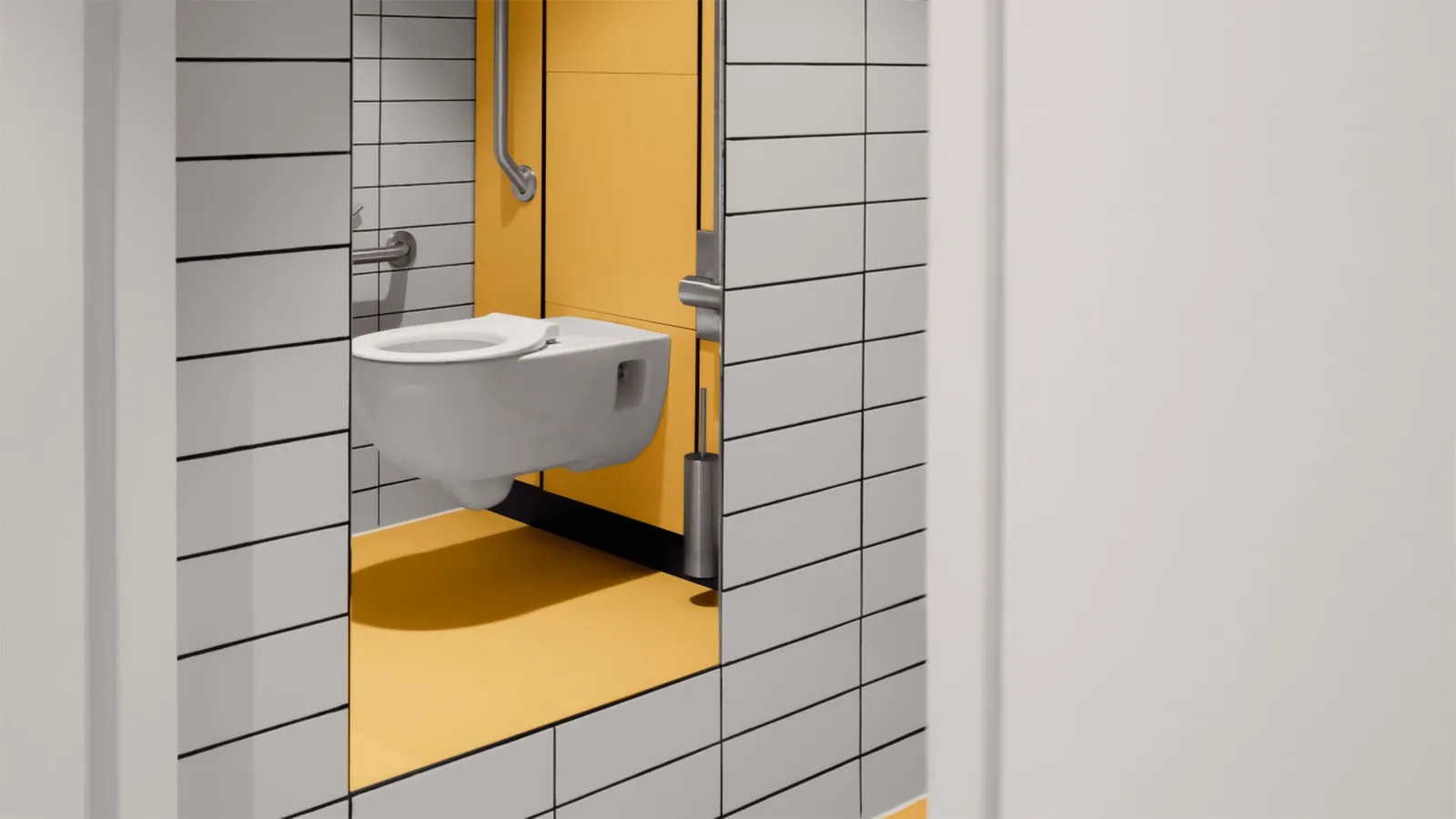
An inclusive bathroom is one that people with different abilities can go on using independently, comfortably and with dignity, throughout the lives of the people who live there, without it ever looking like a “disabled bathroom”. Design for All and Inclusive Design, two distinct approaches, treat it as a system in which thresholds, heights, controls, contrast and light work together, and they involve people through Co-Design from the very start of the process. The regulations guarantee minimum dimensions; quality of use, and well-being, have to be designed.
For too long the bathroom has been treated as a technical space: a room governed by dimensions, requirements, minimum provisions and solutions often conceived more to solve a problem than to create comfortable quality of use. Yet it is in the most intimate room of the home that the true maturity of a design shows. The bathroom measures not only comfort, but independence, dignity, the continuity of everyday gestures and, ultimately, the way design interprets human variety.
When accessibility is approached as mere compliance, design limits itself to correcting. When it is conceived as a generative principle, the bathroom becomes a laboratory of innovation, where form, function, material and technology converge in a more advanced vision of the home. It is in this shift that Design for All takes on its deepest meaning: not as a specialist category, but as an approach that makes design more durable and more contemporary.
Today, internationally, the rigid distinction between the standard bathroom and the accessible bathroom is at last beginning to lose ground. Not because specific needs have disappeared, but because the most advanced design has begun to recognise human variability as a structural fact rather than a marginal exception. Designing for everyone is not a compromise; it is an act of systemic awareness. The economic dimension of this choice is discussed in the article on the business case for Design for All.
What the regulations say, and where they fall short
In Italy the reference is still DM 236/1989 (opens in a new tab). At point 8.1.6 it requires a washbasin with its top 80 cm above the floor and no pedestal, a WC with its front edge 75–80 cm from the rear wall and its seat at 45–50 cm, and it indicates wall-hung fittings as preferable. The same decree, in Article 2, also counts as a barrier the absence of features that enable orientation and the recognition of places. These are necessary requirements, but they are thresholds: the dimensions describe a wheelchair manoeuvre at a single moment, not the gesture of someone who leans, stands up, reads a control or whose condition changes over the years. Compliance, moreover, is assessed on the room as a whole – manoeuvring space, approach and installation – not on the data sheet of a single fitting. A bathroom that meets the regulations can still be one nobody wants to use: that is the gap the design has to close.
From medical equipment to contemporary design language
The first phase of accessibility in the home was inevitably technical and clinical: exposed grab rails, add-on seats, toilet raisers, corrective accessories. Useful and necessary solutions, but often foreign to the language of interior architecture. For a long time the accessible bathroom was presented as an “other” bathroom, cut off from the vocabulary of comfort, well-being and formal quality.
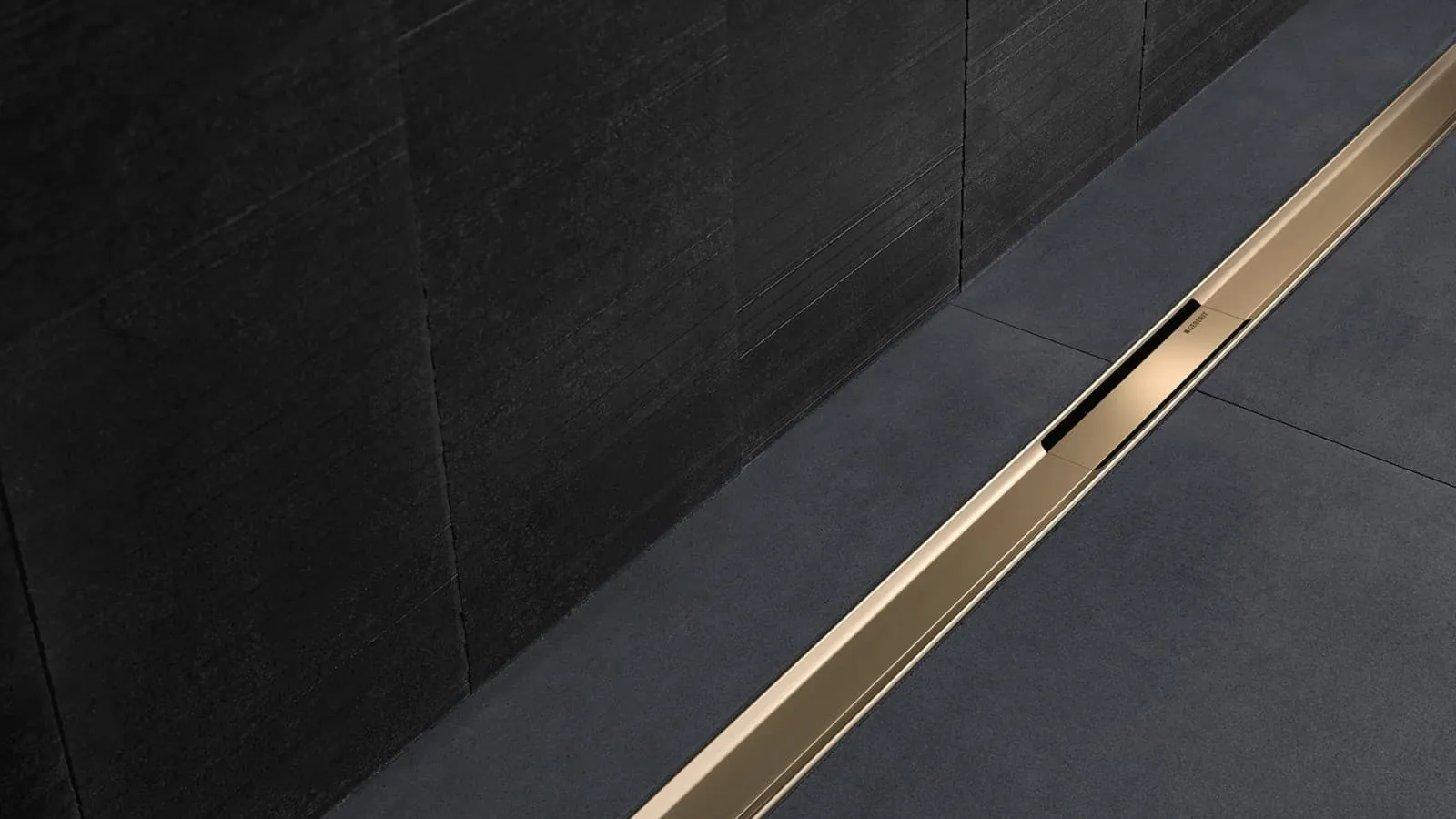
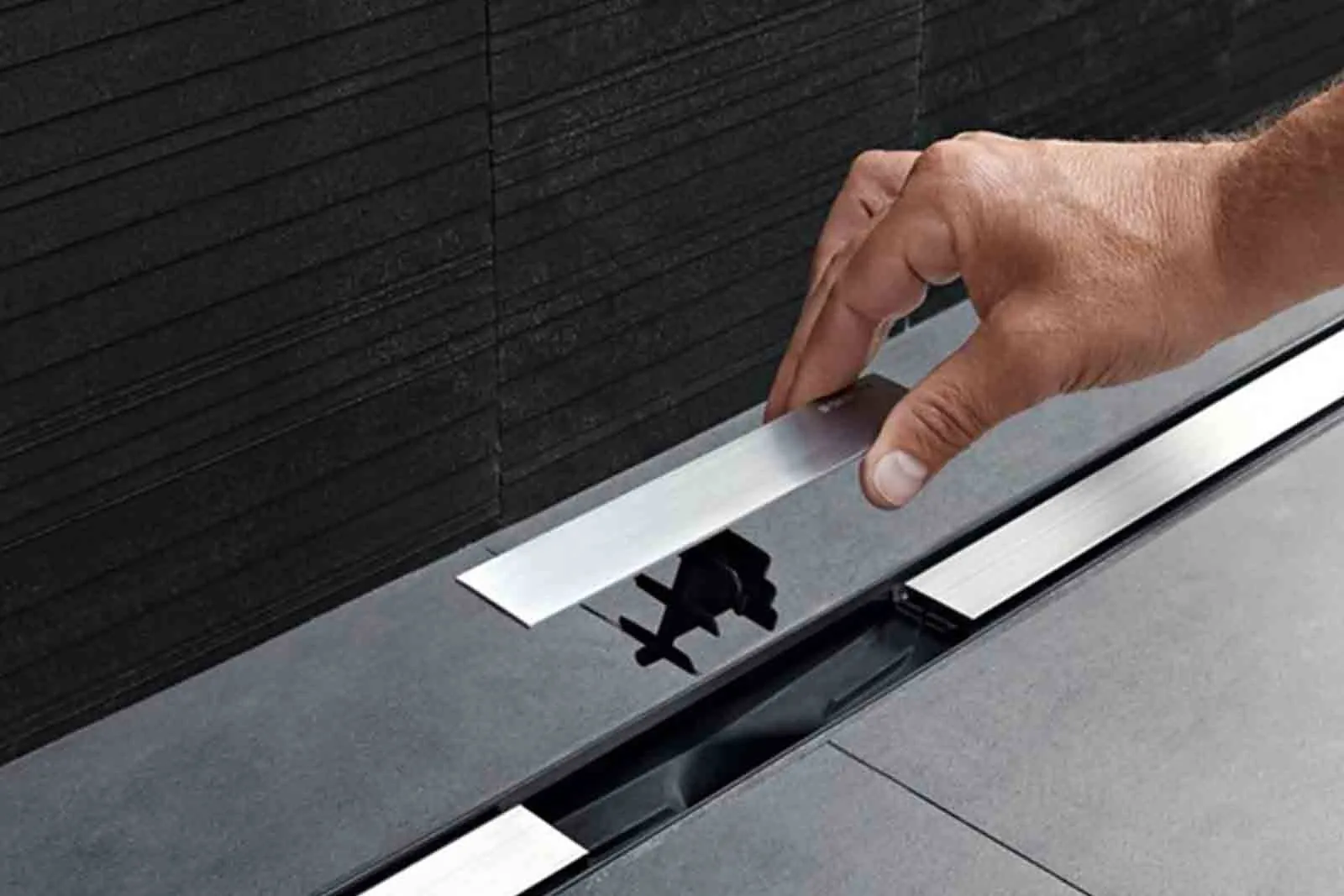
Today the most interesting shift concerns not only performance, but language. A telling example is the spread of level-access showers and integrated drainage systems, which have turned a functional necessity into a mark of architectural quality. Geberit CleanLine (opens in a new tab) shower channels are presented precisely as a minimal, hygienic solution that allows uninterrupted movement, contributing to a more fluid, less fragmented idea of the bathroom. The threshold disappears, the floor becomes one continuous surface, and accessibility coincides with the continuity of the space.
This is a decisive cultural point: when an inclusive solution no longer looks like a technical concession but like an expression of design quality, the collective perception of the product changes too. The bathroom is no longer merely usable; it becomes more legible, more elegant, more convincing.
Adaptive systems: when the bathroom transforms
The next step is even more significant, because it concerns not only form but how the product behaves over time. The most interesting frontier is that of adaptive systems: elements that do not ask users to conform to a fixed configuration, but can be adjusted to suit postures, needs and conditions of use.
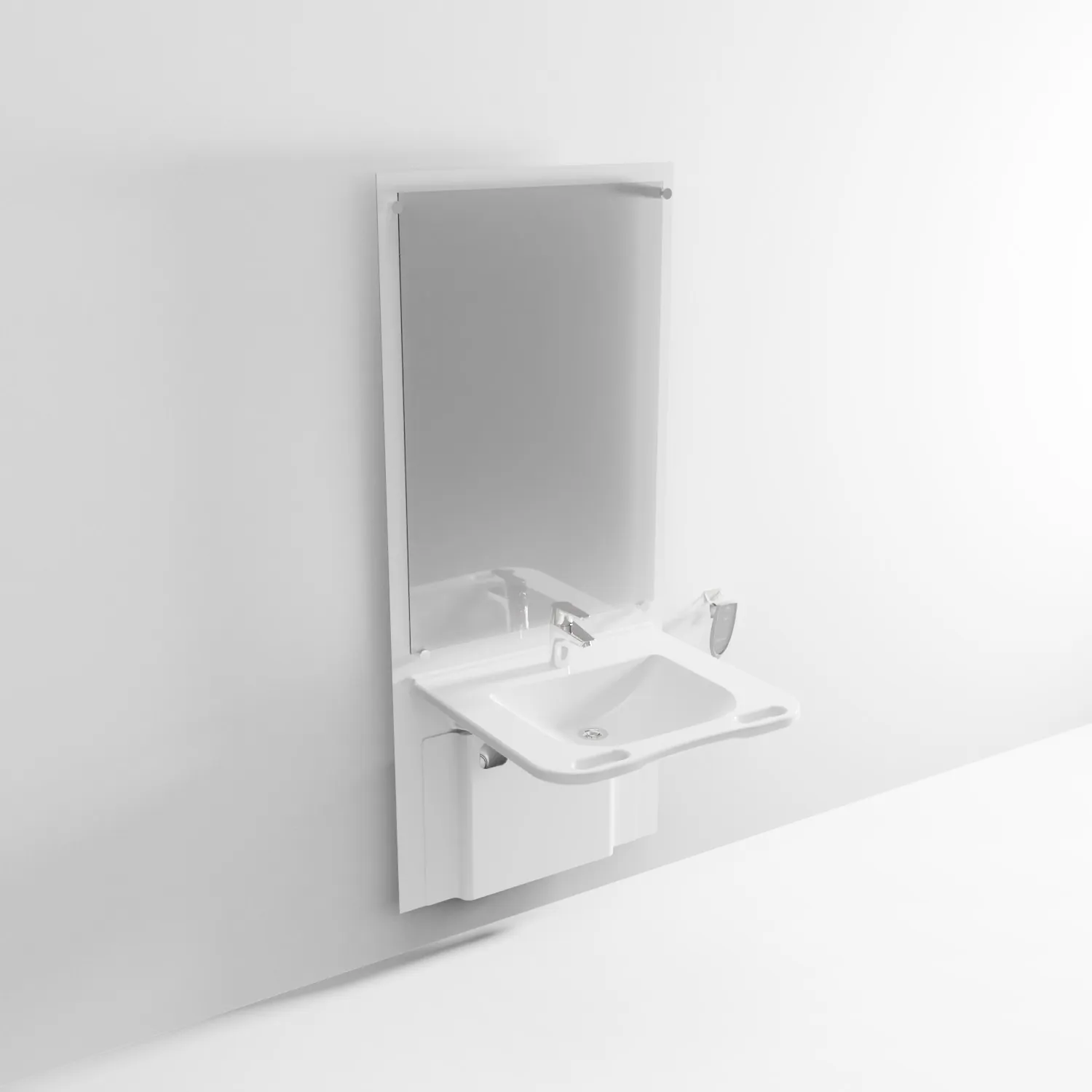
From this perspective, products such as ROPOX AdaptLine (opens in a new tab), height-adjustable with a handle, and SlimLine (opens in a new tab) are significant above all because they point in a direction: making height adjustment a permanent quality of the bathroom system rather than an exceptional add-on. Yet seen through a designer’s eyes, this frontier is clearly still incomplete: the principle is right, but the interaction could be more intuitive and the design language more resolved, less specialist and more in keeping with the contemporary home.
Here lies an important theoretical difference: traditional design tends to fix a correct dimension, while adaptive design introduces transformability as a value. It does not look for an ideal average, but creates the conditions for many different uses.
Smart bathrooms and reducing cognitive load
Technology, in this scenario, is not interesting in itself. It becomes interesting when it reduces the physical and mental effort of using the bathroom. A truly inclusive bathroom is not only safe: it is understandable and intuitive, its signals are consistent, and it guides the user without demanding constant corrections or guesswork.
TOTO WASHLET (opens in a new tab) systems, with individual settings for spray, temperature and wand position, together with functions such as EWATER+, automatic descaling and energy-saver mode, show how personal hygiene can become more precise and less dependent on complex manual sequences. Similarly, Roca In-Wash Inspira (opens in a new tab) integrates washing, drying, a control panel, a night light, a presence sensor and, in the most advanced versions, even a cistern built into the pan, reducing bulk and simplifying the whole. In these cases technology does not take centre stage: it recedes into a simpler, quieter, more natural interaction.
This is the most advanced point of the contemporary bathroom: not the accumulation of functions, but their discreet orchestration. True innovation does not lie in adding complexity, but in ensuring that technical complexity translates into a simpler experience.
Beauty and inclusion: a mature convergence
For a long time it was believed that accessibility and beauty belonged to two separate registers: necessity on one side, desire on the other. Today this opposition is ever harder to sustain. The most mature design shows that inclusion does not impoverish formal language, but forces it to become more essential, clearer, more honest and kinder.
The contemporary bathroom does not need special objects put on display as exceptions. It needs products that bring support, safety, ease of use and perceived quality together in a single design. This is exactly where our expertise lies: not in designing separate solutions, but in developing bathroom products that turn the needs of a wide range of people into architectural quality, clarity of use and a contemporary design language.
From this perspective, Design for All does not step in at the end to correct; it comes in at the start to set the direction. It does not add: it brings order. It does not specialise: it makes the design more informed, more open, able to last over time.
A test case: “Anche per me”
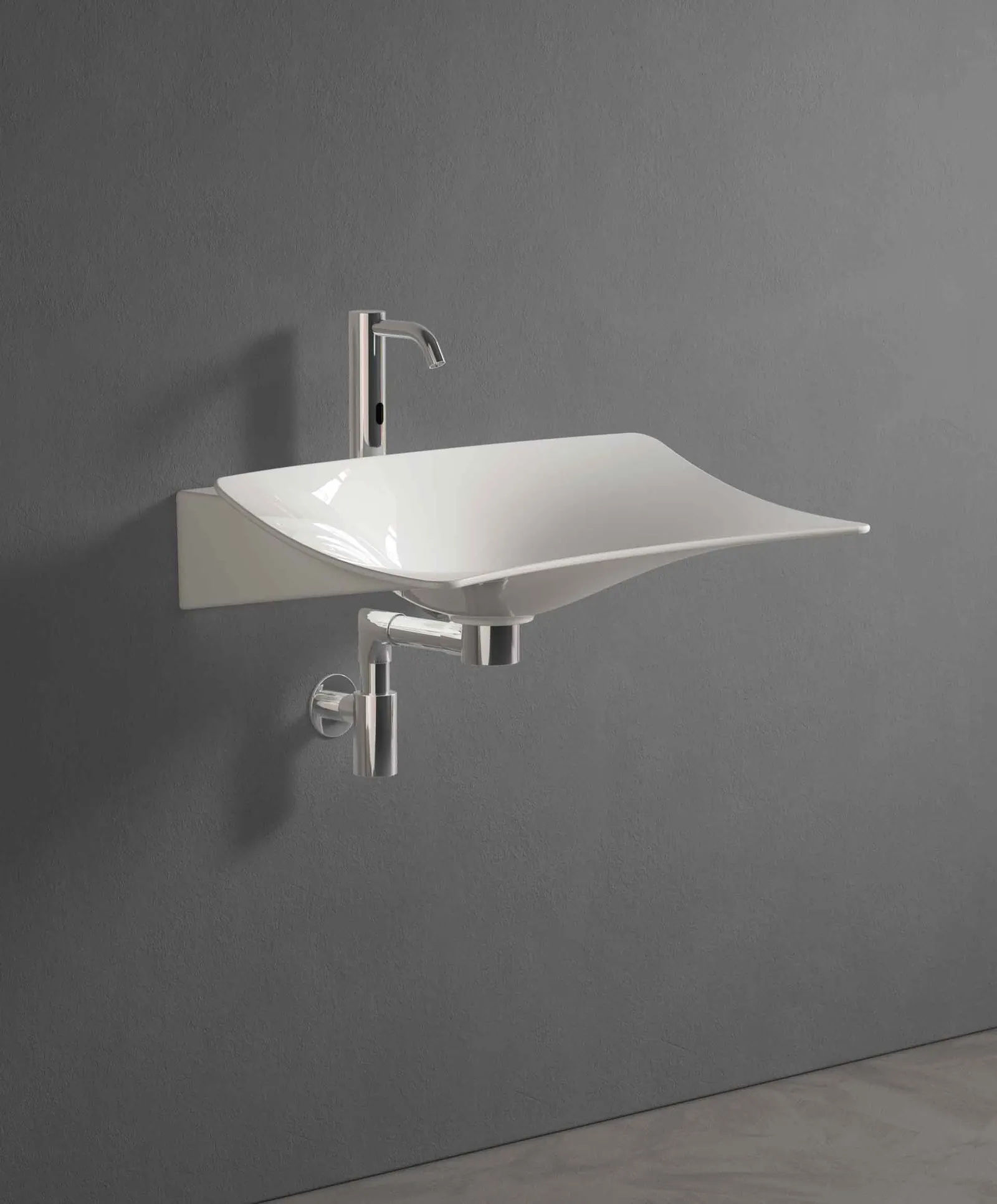
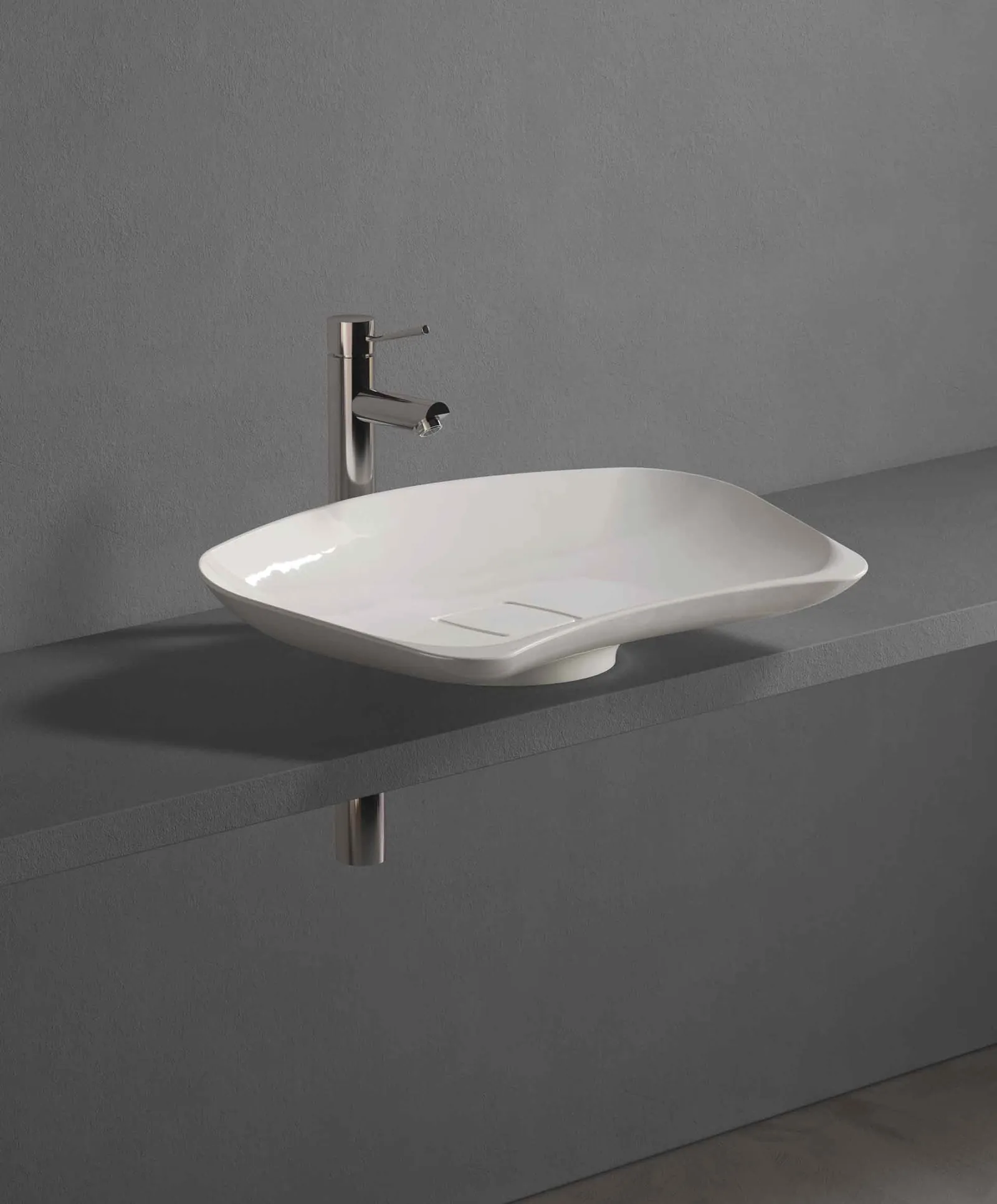
The “Anche per me” project, published in Il Bagno Oggi e Domani no. 356, puts this argument to the test in around 5.5 square metres: a double washbasin, an open shower with two seats, only three grab rails and the option of adding more when they are needed. The Prime washbasin, designed by Francesco Rodighiero for Goman, has an integrated elbow rest and clear space underneath that allow a wheelchair user to approach from the front; it does not require a dedicated bathroom and can be fitted in an ordinary home bathroom. The floor-standing WC, designed for the project and still a concept, is 75 cm deep: installed against the wall, its own depth provides the distance required by the regulations, without a false wall.
Designing for human variability
Global demographic trends make this reflection all the more urgent. The United Nations (opens in a new tab) (World Population Ageing 2019) indicates that by 2050 one in six people in the world will be over 65, while the WHO (opens in a new tab) notes that by the same date the population aged 60 and over will reach around 2.1 billion. This is not a niche, but a structural condition of contemporary societies.
In Italy the trend is more marked: according to Istat projections (opens in a new tab) published on 31 August 2026, people aged 65 and over will rise from 24.7% of the population on 1 January 2025 to 34.5% in 2050. European data on ageing and disability are collected on the page Ageing and disability in Europe: the data.
Designing a bathroom today therefore means treating variation in ability as an ordinary condition of design: mobility that changes, balance that weakens, strength that varies, eyesight that tires, needs that evolve over a lifetime. The inclusive bathroom is a space designed for a whole life, and for the possibility that this life will go through different phases without losing independence and dignity.
This, ultimately, is the highest challenge of contemporary design: not to build environments that are perfect for an ideal moment, but systems that remain relevant over time.
We support companies and designers in developing bathroom products and spaces, with a process that runs from listening to people to testing the solutions: the page on Design for All and Inclusive Design consultancy describes how we work.
In our projects
Read next
- Essay“Anche per me”: an accessible, inclusive bathroom in 5.5 square metresHow do you design a bathroom for everyone in 5.5 square metres?
- InterviewParticipatory design for change: Francesco Rodighiero in Il Bagno Oggi e DomaniHow does design change when people take part?
- EssayAccessible architecture: innovation and inclusion in public and private spacesHow do you design accessible architecture that goes beyond the regulations?
Designing the bathroom as a system
Bathroom products and spaces: we can work together, from listening to people to testing the solutions.