InsightsDesign for AllEssay
Why do products exclude people, and how does Design for All prevent it?
The phenomenology of exclusion: Design for All as a contemporary approach to design
A 2012 essay, republished with dated notes: design that ignores the diversity of people produces exclusion, both social and perceived. From Universal Design to ageing, from the examples of Autogrill and the Delicanter to the case of Ikea, why Design for All is the process that prevents it.
· updated 12 min read

Fourteen years after publication, the argument stands: design that ignores the diversity of people produces exclusion, both social and perceived, and Design for All is the process that prevents it, because it involves people and measures their well-being, not just their access.
The essay was published in 2012 in Bootleg 5/10; the update notes date from October 2026. The data and some examples have changed: we update them in the notes, kept separate from the text. The essay is republished with a single change to the text, a terminological update: the Italian expressions “diversamente abili” [‘differently abled’] and “popolazione portatrice di disabilità” [roughly ‘the disability-bearing population’] have been replaced with “persone con disabilità” [‘people with disabilities’], the term used by the UN Convention and, since 2024, by Italian law (Legislative Decree 62/2024, Art. 4), and Design for All is referred to as an approach and a process. The reasons for this choice are set out in the article Disabled, differently abled, people with disabilities.
 (opens in a new tab)
Universal Design: an encounter in 2009
I was in the United States in the first half of June 2009, wandering along the promenade by the ocean. It was my first time in the United States, and I have to admit I was deeply disappointed: a place without identity, at least as we Europeans understand it, and without points of reference. At last I came to a bookshop, curious to see whether I would find anything worth the effort of reading in English; right by the entrance was the Design and Architecture section. I was pleased, partly because I had immediately found my spot in an immense bookshop (like everything in America), and partly because I would spend the next few hours somewhere other than a fast-food restaurant, a clothes shop or an exhibition.
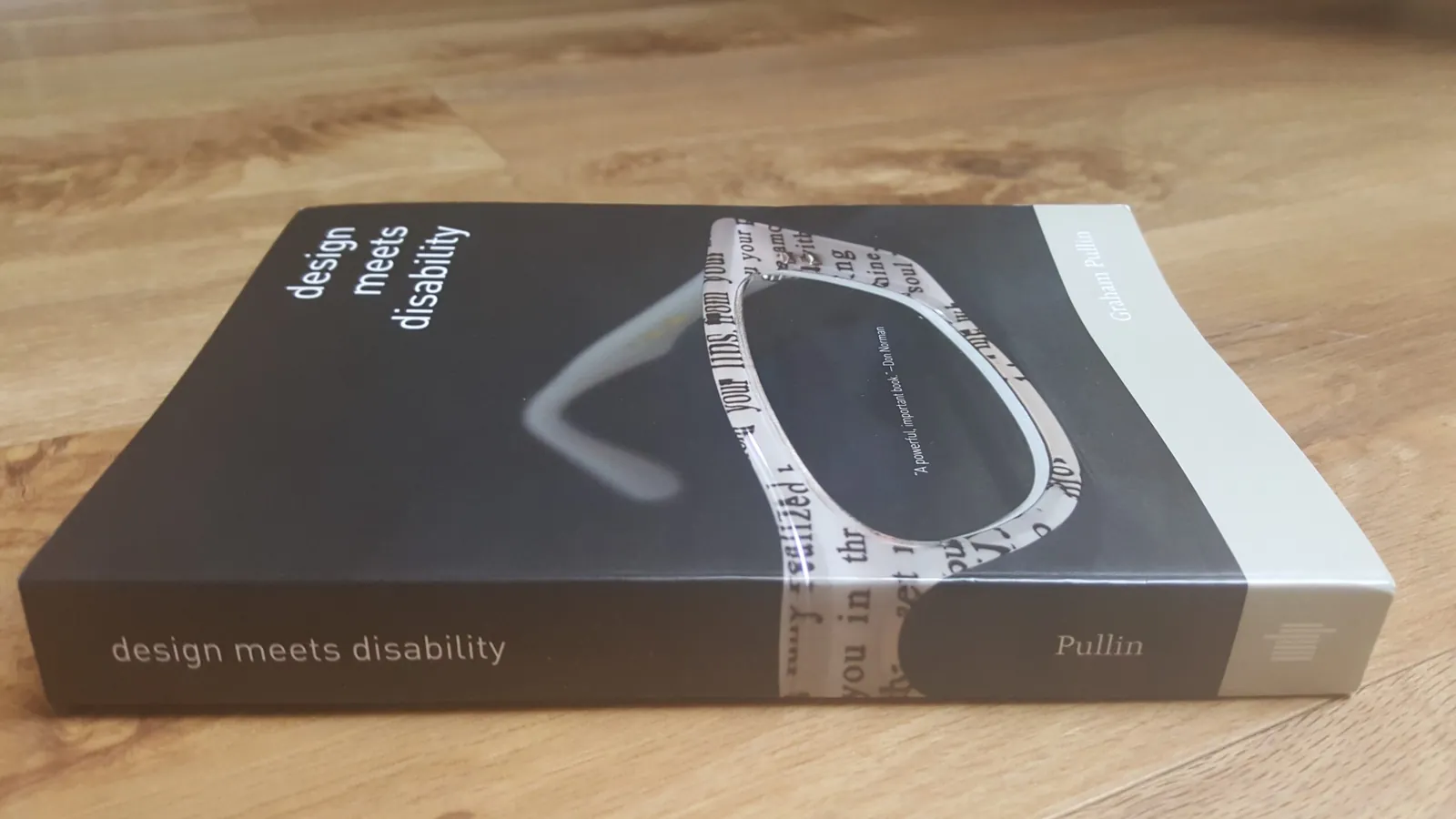
Among the featured books, right at the front, was the one I would buy shortly afterwards: Design Meets Disability by Graham Pullin. The subject did not sound new to me, precisely because at the time I was developing a very particular washbasin for people with disabilities for a company (Goman (opens in a new tab)), and my research had repeatedly come across Universal Design and its applications.
From the first pages it is clear that “universal design is the term associated with a broad-spectrum design methodology whose aim is to design and build buildings, products and environments that are accessible to every category of person, with or without disabilities” (our translation). Among the many possible examples of Universal Design, the first the author chooses is the iPhone (at the time, the 3G); the reason lies in the numeric keypad, which the operating system had designed to fill the whole screen. The number keys were, and still are, oversized, so dialling a phone number is extremely accessible, even for older people.
This showed strikingly that the target audience was not, as one might assume, only people with disabilities, but above all people in what is now the well-recognised third and, above all, fourth age. It became clear that advanced age is among the main issues addressed by the disciplines and design processes for the widest range of users.

Ageing: the numbers
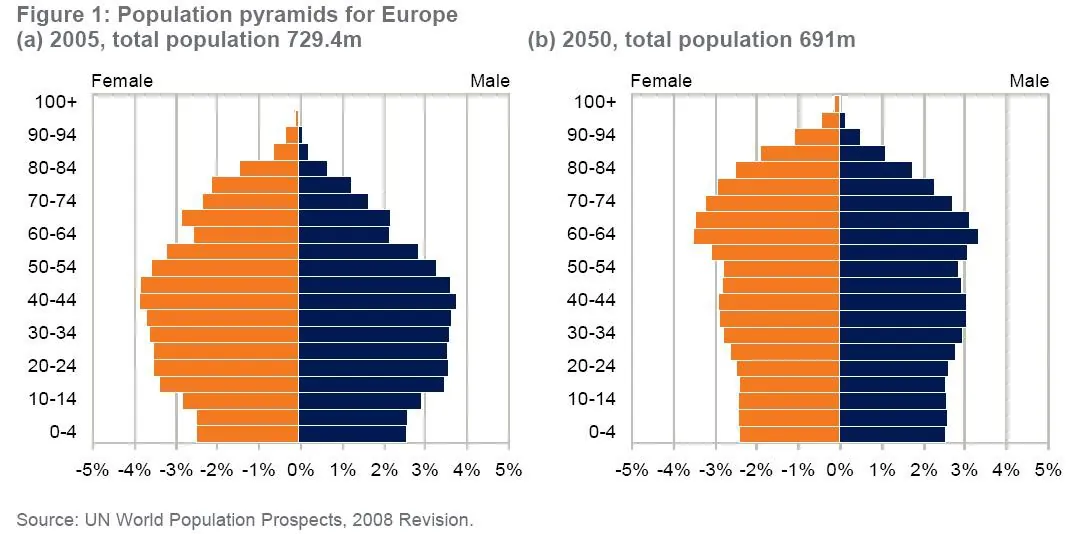
A few figures help to convey its scale and significance. It should be said first that the definition of an “older person” as such is vague and elastic; both in science and in relations between individual and society, the indicator taken for ageing is chronological age. In other words, a person is defined as older once they have passed a conventional threshold of 60–65 years. Again by convention, the third age runs from 60–65 to 75, and the fourth age from 76 onwards. In the European Union there are currently more than 70 million people over 60, which corresponds to 20% of the entire population.
Note, 2026. On 1 January 2025 people aged 65 and over made up 22.0% of the population of the European Union and 24.7% of the population of Italy, the highest share among the Member States; people aged 80 and over made up 6.2% (Eurostat (opens in a new tab), data extracted in February 2026). The full data are on our page on ageing and disability in Europe.
By 2030, according to a Eurispes survey, one person in three in Italy will be an older person. Obviously, people of the same age group have nothing intrinsically in common: there are very youthful, lively, self-sufficient 80-year-olds. Equally obviously, approaching the third age, and above all the fourth, makes illnesses, medical conditions and difficulties of various kinds more likely.
Note, 2026. Istat projections released on 31 August 2026 indicate that in Italy people aged 65 and over will rise from 24.7% in 2025 to 34.5% in 2050 (Istat, Previsioni della popolazione residente, base 1/1/2025). The age thresholds of the two estimates differ; the trend indicated in 2012 is confirmed.
Why Design for All is something else
Yet on closer study, Universal Design is not the most appropriate approach, or at least not the most complete and thorough, for tackling a subject as complex and varied as design for the whole population. Universal Design, widespread in the United States, concentrates heavily on the final product, using easy-to-apply rules; this delivers short-term results and benefits, but fails completely to build an awareness of social inclusion among decision-makers and designers. The methods proposed by this discipline therefore cannot measure respect for human dignity, because it cannot be measured with purely objective parameters. In this respect, Design for All is radically different.
Note, 2026. Since 2012 Universal Design has added eight goals to its seven principles (Steinfeld and Maisel), including wellness, social integration and “dignity and respect”. The difference the essay points out remains, but it needs to be stated precisely: in Universal Design, dignity is a requirement of the outcome; in Design for All it is tested with people, involved at every stage of the design, as the Stockholm Declaration requires. A comparison of the approaches, with the sources for each, is in the article Design for All, Inclusive Design, Universal Design: design approaches compared.
“Design for All is design for human diversity, social inclusion and equality”. “Designing for All means conceiving environments, systems, products and services that people with diverse needs and abilities can use independently” (our translation). It is a design process that makes conscious use of the analysis of human needs and aspirations and requires the involvement of direct users. Unlike other disciplines, it therefore considers every element of the design, so that none of them amounts to social discrimination or a code that ghettoises users. This is the key point that gives Design for All a privileged, more contemporary position, while at the same time widening the factors analysed in the design. All five human senses are involved, which is why it can be called a holistic approach – undoubtedly a creative and ethical challenge not only for designers but also for entrepreneurs, public administrations and political leaders. Finally, it is important to make clear that “All” means all the people who want, wish or need to use what is designed, not “everyone” in a categorical sense.

Examples of Design for All
There are several examples in which this design process has been applied with reasonable success. The accessible space par excellence (though often a discriminatory one) is certainly the toilet, not least because it is governed by precise regulations when it serves the public in bars, restaurants, hotels, trade fairs and so on. A less obvious example is the effort Autogrill has made in recent years to provide facilities that follow Design for All guidelines.
At present, Autogrill’s truly accessible motorway service areas are at Ravenna on the E45 and Villoresi Est on the A8 Milano–Laghi motorway. Every part of these two buildings can be used without discrimination: the shelving is within everyone’s reach (children, adults, people with disabilities), the furniture (seats and tables) is light and easy to move, colour contrast is adequate, counters are accessible to wheelchair users too, and so on. The toilets at Villoresi Est even have an original, almost one-of-a-kind layout that is not only non-discriminatory but more comfortable and functional. It is no coincidence that the Associazione DfA Italia awarded Autogrill the Design for All Quality Mark (opens in a new tab).
Note, 2026. The Villoresi Est service area, designed by the architect Giulio Ceppi, is documented among the Design for All examples of EIDD – Design for All Europe (opens in a new tab), which also mentions the 2010 award to the Mensa di Ravenna area on the E45.
Among accessible products, on the market or in development, the Delicanter, designed by Paolo Favaretto, still deserves a mention. It is a blown-crystal decanter with an almost spherical bottom resting in a wooden or metal base. Among other things, this makes it possible to serve the drink (wine or spirits) with no effort at all, because the decanter only needs to be rolled on its base, not lifted. It is a design that opens the way for people who have difficulty handling weights (especially unbalanced ones) or have lost precision in everyday gestures. This kitchen accessory is just one of a long series of innovative objects that underline the importance of creating a world that is usable and comfortable for everyone, through design that pays ever closer attention to people’s needs.

Exclusion as a phenomenon: the case of Ikea
If it is clear that Design for All (like similar disciplines) is addressed mainly, but not exclusively, to older people (for accessibility and independence), and therefore to a very large section of the population, it is surprising that the approach is not more widespread and visible in everyday life. Research shows that 90% of products in Europe are not fully accessible, and what is urgently needed is education and, above all, a design sensitivity that completes the work and effectiveness achieved by applying local or international regulations, such as the removal of architectural barriers.
Note, 2026. The 90% figure, reported in 2012, has no verifiable source today: we have kept it as part of the original text, not as a statistic. For up-to-date figures on ageing and disability, see our dedicated page.
Just think of Ikea, known worldwide both for furniture and furnishings and for democratic, low-cost design, to see that “accessibility” is not a priority: at present, in fact, there is a kitchen for people with disabilities and little else. Seen from a Design for All perspective, Ikea immediately becomes a less democratic reference, and its visibility gives food for thought. In this sense, sadly, we can speak of a phenomenology of exclusion, both social and perceived. The reasons that keep Ikea from a more explicit commitment to social inclusion are many and perhaps beyond question, but this multinational is certainly missing an opportunity at present.
Note, 2026. Ikea has moved since 2012: in 2019, in Israel, with ThisAbles, 3D-printable components for adapting existing furniture, and in 2025 with BÄSINGEN, a small line of bathroom and home accessories (Apartment Therapy, 3 April 2025 (opens in a new tab)). These are concrete steps, but they confirm the essay’s point: accessibility arrives as a dedicated line alongside the catalogue, not as a quality of the whole catalogue.
Design for All as an economic lever
Design for All can indeed be an economic lever for companies that should not be underestimated: it makes it possible to satisfy most customers by offering ease, comfort and pleasure of use to groups that are disadvantaged or often excluded; it builds customer loyalty because it values their specific needs; and it gives a creative, non-discriminatory response to safety and disability regulations. Clearly, widening the use of an environment or a product means increasing the number of users or consumers but, above all, in today’s landscape it allows a company to stand out and show itself to be socially engaged and contemporary.
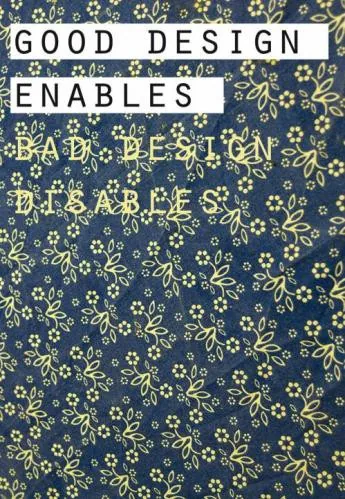
It can be said with certainty that designing with Design for All does not mean imposing limits or restrictions on a project, but is an opportunity to develop products, systems or environments with strong innovative value, capable of carrying new languages and solutions. As Paul Hogan, president of EIDD Design for All Europe, famously put it: “Good design enables, bad design disables”.
Note, 2026. Paul Hogan was the founder and first president of EIDD (1993–1996). The motto appears at the top of the Stockholm Declaration (opens in a new tab) page on the EIDD website. The economic value of Design for All is explored, with updated data, in the article on the return on investment in accessibility.
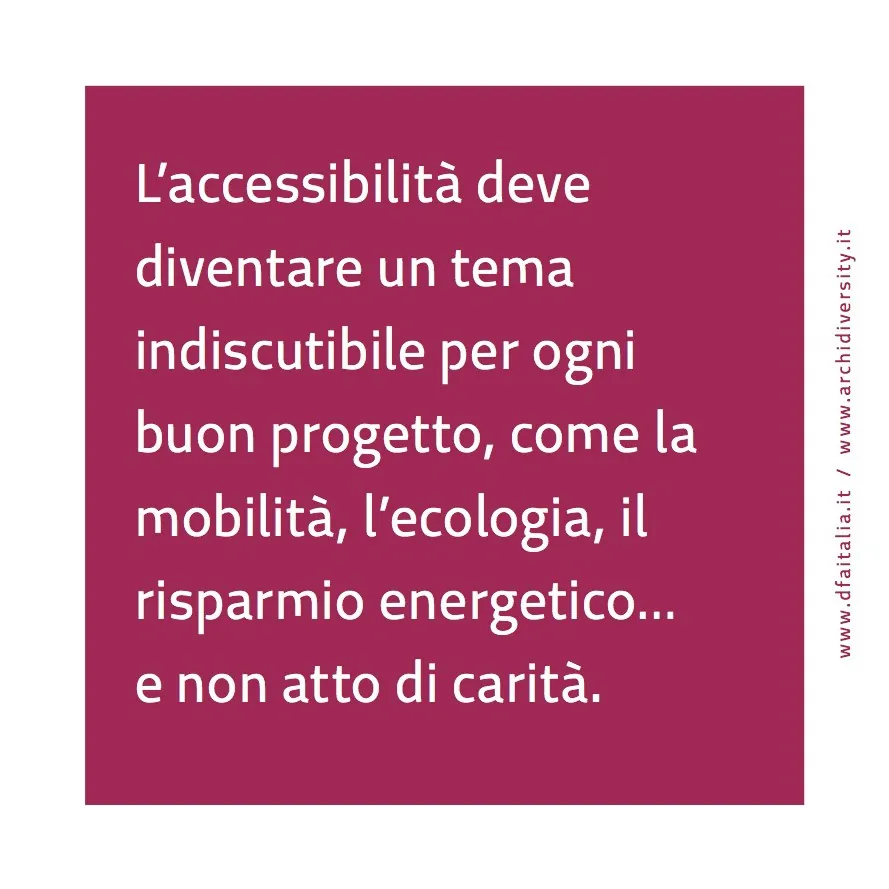
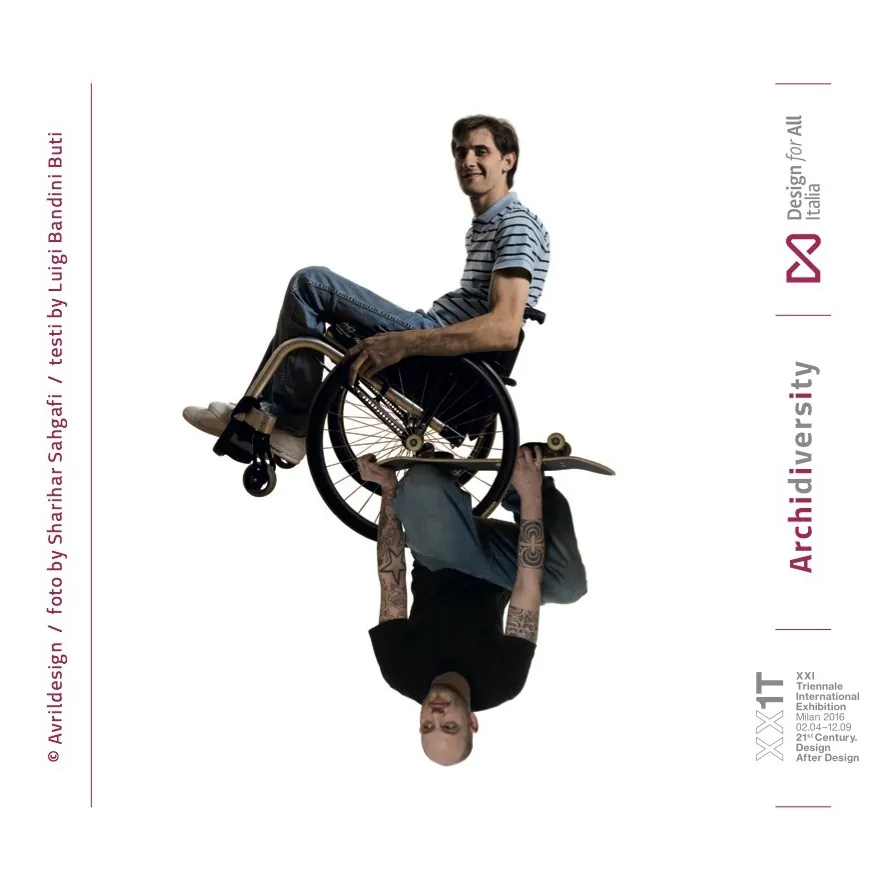
The time has come for Design for All, or more generally design for the person, to be treated, considered and valued with the same commitment that has been given over the last decade to “sustainability” and related issues. If a product cannot ignore its environmental impact, it is no longer acceptable for a product to ignore the possibility that it will be used by people with diverse abilities. The future of design follows, as history teaches, from the future of humankind; the only certainty is that people are living ever longer, and the difficulties this creates must be addressed.
If design does not take this on, it places itself outside history.
Bibliography
- Graham Pullin, Design Meets Disability, MIT Press, 2009
- Avril Accolla, Design for All — Il progetto per l’individuo reale, Franco Angeli, 2009
- Luigi Bandini Buti, Ergonomia Olistica, Franco Angeli, 2008
- Daniela Gilardelli, Progetto “Idea DfA” — Il primo progetto italiano di introduzione del Design for All nelle PMI e le linee guida emerse, Camera di Commercio di Milano (Milan Chamber of Commerce)
Alteration, reproduction (in whole or in part) and/or online distribution of this work are permitted only with the authors’ prior authorisation. This essay was published in 2012 in Bootleg (opens in a new tab) 5/10.
In our projects
Read next
- News and eventsDesign for All Process: the Florence event of 17 October 2026What did the Design for All Process event in Florence bring together?
- InterviewInclusive design: the Design for All approach on Radio Canale ItaliaWhat is inclusive design, as explained on the radio?
- InterviewFrancesco Rodighiero on Rai Radio 3: Design for All at the heart of the cultural debateWhy is Design for All a cultural issue, not only a technical one?
Designing without excluding
If a product, a space or a service risks excluding someone, we can test it with the people who will use it, from the earliest stages of the design.