InsightsDesign for AllNews and events
What is Francesco Rodighiero’s remit as president of Design for All Italia?
Francesco Rodighiero, president of the Design for All Italia association
Francesco Rodighiero has chaired the Design for All Italia association since 2020, with a programme on Legge 13/1989 (Italy’s law on architectural barriers), training and Co-Design. The board elected in 2021 and the current one, the stated objectives and the documented work, from the Bologna Civic Museums (Musei Civici di Bologna) to Linea 5000 and the study day in Florence.
· updated 3 min read
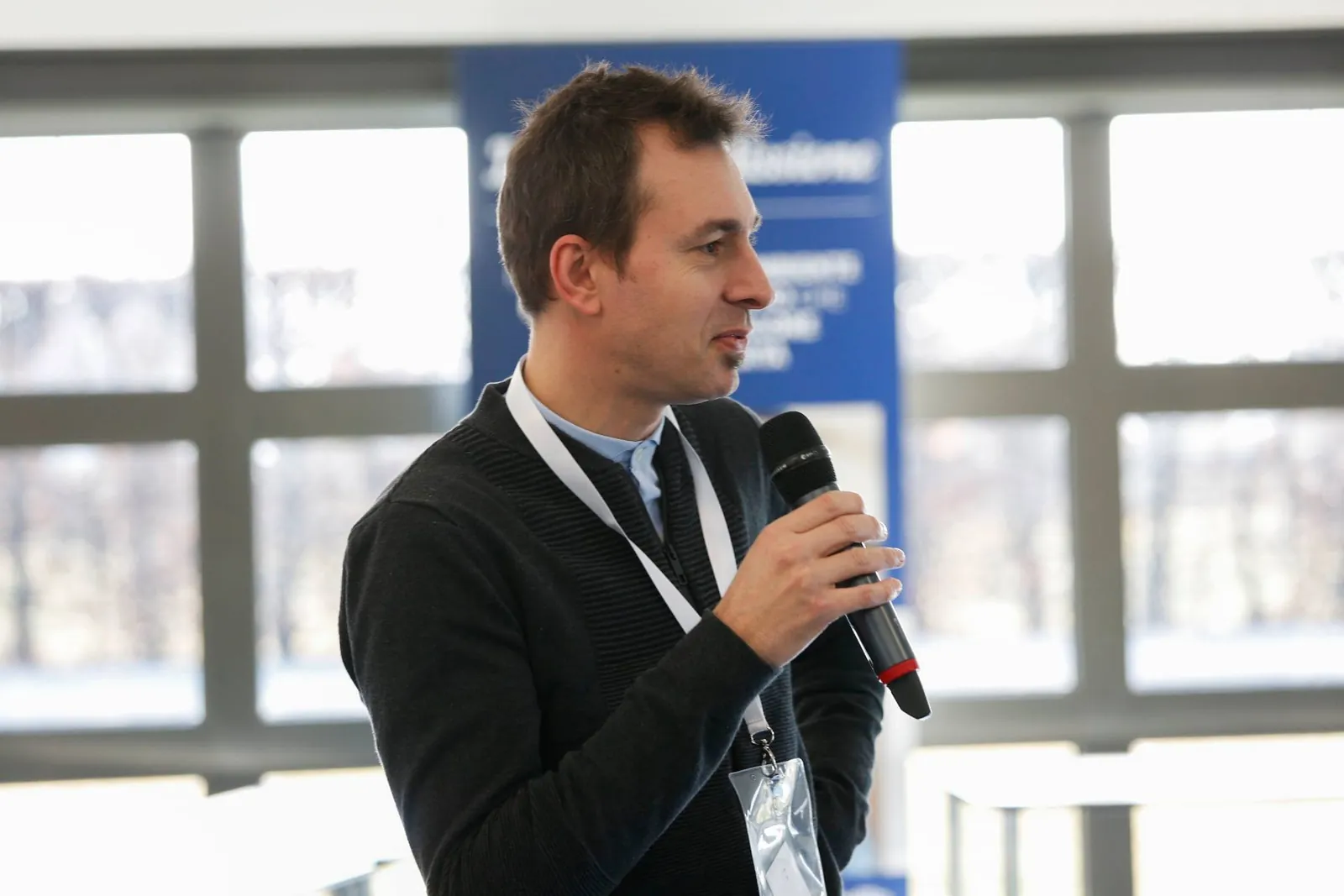
Francesco Rodighiero has chaired the Design for All Italia association (opens in a new tab) since 2020. The association promotes Design for All as an approach to designing spaces, products, services and systems that can be used by as many people as possible, with the direct involvement of those who will use them. The programme for his term set out three directions: a reassessment of Legge 13/1989, training, and Co-Design as a professional tool for companies and public bodies.
This page was first published on 13 May 2021 as news of the board election; since 2026 it has brought together the remit and the documented activities.
The election and the remit
In May 2021 the association held elections for the board of Design for All Italia. The president’s institutional role is mainly to promote the values and principles of Design for All.
The board
The board elected in 2021 was made up of:
- Francesco Rodighiero (President)
- Giuseppe Mincolelli (opens in a new tab) (Vice President)
- Pete Kercher (Communication)
- Claudia Comella (opens in a new tab) (Treasurer)
- Giulio Ceppi (opens in a new tab) (Secretary, with responsibility for Teaching)
According to the association’s official page (opens in a new tab), consulted on 29 October 2026, the current board is made up of Francesco Rodighiero (President), Giuseppe Mincolelli (Vice President), Michele Marchi (Secretary), Claudia Comella (Treasurer), Pete Kercher, Erica Isa Mosca and Alessia Planeta (Board Members); Giuseppe Di Bucchianico is Past President.
The 2021 objectives
In 2021 the board set out to continue the work of the previous president, Giuseppe Di Bucchianico (opens in a new tab), consolidating the association’s base and building effective communication for a broad and varied audience. The first commitment announced was a wide-ranging discussion with all stakeholders on the effectiveness of the accessibility law, Legge 13/1989 (opens in a new tab): to understand its strengths and limitations after more than thirty years of application, and to produce documents that could inform a less prescriptive, more guidance-based standard, in line with the approach taken in Europe and the Nordic countries. The site discusses this in a dedicated article: The removal of architectural barriers: Legge 13 and the results achieved since its adoption.
The programme also aimed to develop services and training: the association wanted to become a solid point of reference on the subject for courses, universities, institutes and public authorities, while remaining open to consultancy for companies on Co-Design processes, identifying stakeholders’ needs in order to define design requirements.
What has been done
Among the case studies published by the association, the one on the Bologna Civic Museums (Musei Civici di Bologna) (opens in a new tab) documents work carried out by Design for All Italia with the Department of Architecture of the University of Ferrara across 12 museum sites: 3 training and initial listening sessions, more than 80 anonymous questionnaires, more than 10 Co-Design workshops with more than 150 participants, more than 400 needs collected and organised into 6 thematic and operational areas, and more than 15 main documents and technical annexes. The outcomes are the design guidelines and the plans drawn up in accordance with the Ministry’s directives for cultural venues.
The case study on BTicino Linea 5000 (opens in a new tab), by contrast, documents the co-creation process at the scale of a mass-produced industrial product, which received the iF Design Award 2025. The projects developed by the studio with the association are collected on the portfolio page Design for All Italia.
On 17 October 2026, in Florence, the association organised the study day Design for All Process: strategie per l’inclusione (strategies for inclusion). The programme also included the public presentation of work on a Design for All certification tool, ahead of an amendment to the association’s statute announced for December 2026.
For projects and consultancy using the Design for All and Inclusive Design approaches, the consultancy page describes how we work.
In our projects
Read next
- News and eventsDesign for All Process: the Florence event of 17 October 2026What did the Design for All Process event in Florence bring together?
- InterviewInclusive design: the Design for All approach on Radio Canale ItaliaWhat is inclusive design, as explained on the radio?
- InterviewFrancesco Rodighiero on Rai Radio 3: Design for All at the heart of the cultural debateWhy is Design for All a cultural issue, not only a technical one?
From the association to the project
Public bodies, companies and universities: in our projects we apply the participatory process the association promotes, from training to Co-Design.