InsightsStandards and valueGuide
What has Law 13/1989 achieved, and where has it stopped short?
Law 13/1989 and the removal of architectural barriers: results and limitations
In thirty-seven years Legge 13 has brought ramps and lifts, but practice has applied mostly its measurements, leaving orientation and perception behind. What the law and Ministerial Decree 236 require, what the data say, and why we propose rules that make the result mandatory and leave the choice of means open.
· updated 8 min read

Legge 9 gennaio 1989, n. 13 (Law No. 13 of 9 January 1989) is the Italian law requiring architectural barriers in private buildings to be overcome and removed; Ministerial Decree (DM) 236/1989 sets out its technical requirements on three levels, accessibility, visitability and adaptability, while Presidential Decree (DPR) 503/1996 extends the rules to public buildings, spaces and services.
Thirty-seven years after its adoption, Legge 13 has made the issue familiar and changed many buildings. Its implementing decree also recognises the barriers that prevent people from finding their way and recognising places, but the requirements that make this verifiable are almost all measurements of widths, gradients and changes in level. Practice has applied the measurements: this is why buildings are more accessible to people who use a wheelchair than to people who cannot see, cannot hear or struggle to make sense of a space.
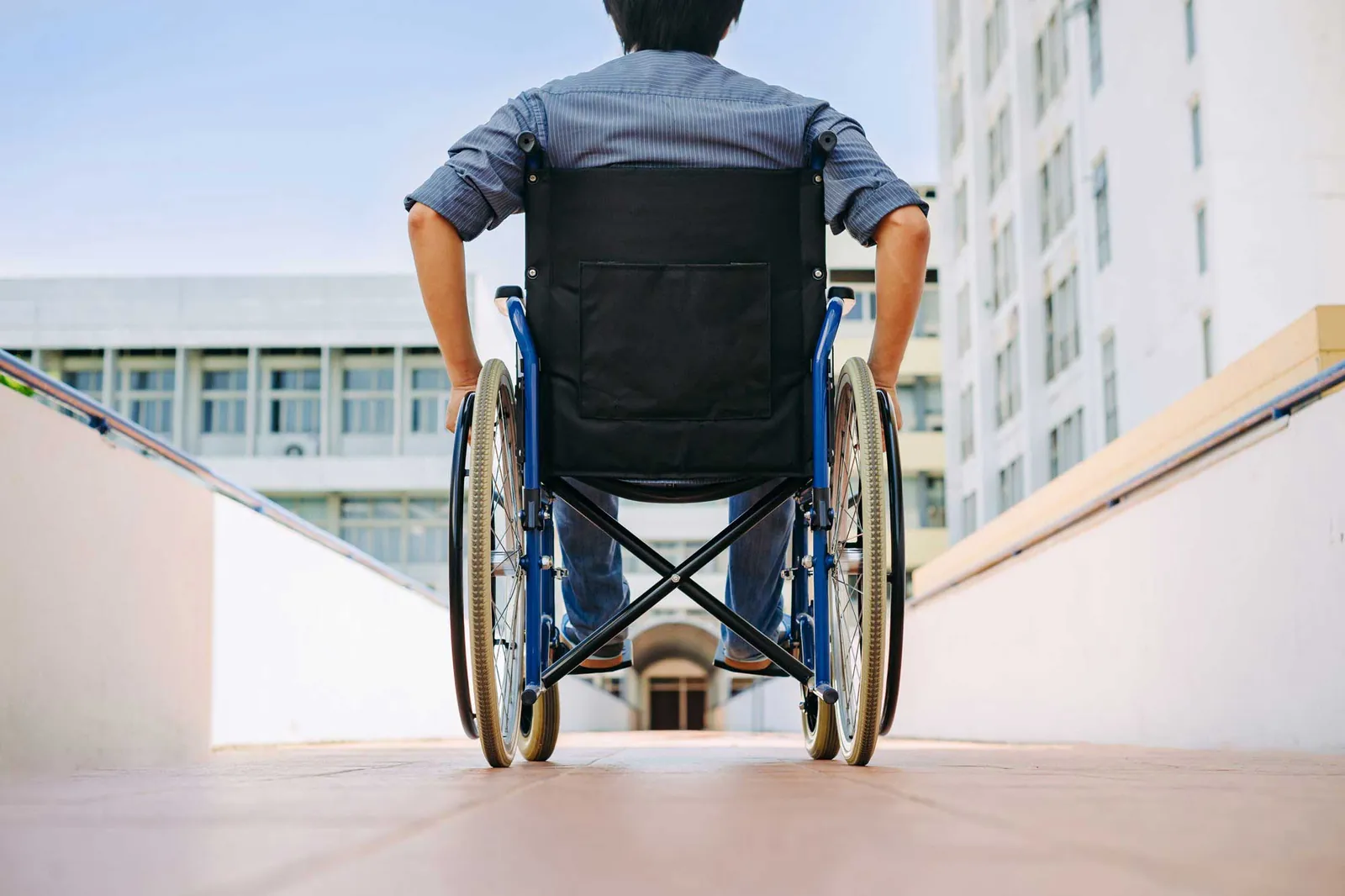
What Legge 13/1989 provides
Legge 13/89 (opens in a new tab) is a fundamental pillar for the removal of architectural barriers in Italy, aiming to guarantee the accessibility, visitability and adaptability of buildings for people with disabilities. Enacted to implement the principle of substantive equality in Article 3 of the Italian Constitution, it sets out a series of technical requirements for new construction, renovation and upgrading. Over time the law has been amended and supplemented to improve and update its original provisions; since 2001 its provisions have been incorporated into Articles 77–82 of the Consolidated Building Code (Presidential Decree 380/2001).
For example, Ministerial Decree No. 236 of 1989 (opens in a new tab) established detailed technical requirements for buildings, and Article 2 of the law itself allows a person with a disability to act independently: if the building’s owners’ meeting (the Italian condominio) refuses to decide, or fails to decide within three months of a written request, the person may install stairlifts and mobile, easily removable structures at their own expense, and widen entrance doors. In addition to the technical requirements, the law provides financial incentives in the form of non-repayable grants (Articles 9–11), applied for through the local council, to encourage the upgrading of existing buildings to the new standards.
The implementation of this law has raised awareness of the importance of accessibility and has encouraged the adaptation of homes and public spaces so that everyone can use them, regardless of their abilities.
Ministerial Decree 236/1989 and Presidential Decree 503/1996: private and public
Legge 13/89 and the subsequent Presidential Decree 503/96 (opens in a new tab) are Italy’s national milestones in removing architectural barriers and including people with disabilities. While Legge 13/89, with Ministerial Decree 236/89, set the accessibility requirements for private buildings, Presidential Decree 503/96 extended the rules to public buildings, spaces and services, with provisions for upgrading existing facilities and designing new ones, to guarantee accessibility and independent use by people with disabilities.
The links between these laws and European policies, such as the European Strategy for the rights of persons with disabilities 2021–2030 (opens in a new tab) and the UN Convention on the Rights of Persons with Disabilities (CRPD), ratified by Italy with Legge 18/2009 (opens in a new tab), are clear. The EU and its Member States are obliged to align their domestic laws with the international agreements they have ratified. This means that Italian legislation must not only meet the minimum requirements set by its own national legislation but also live up to its international commitments.
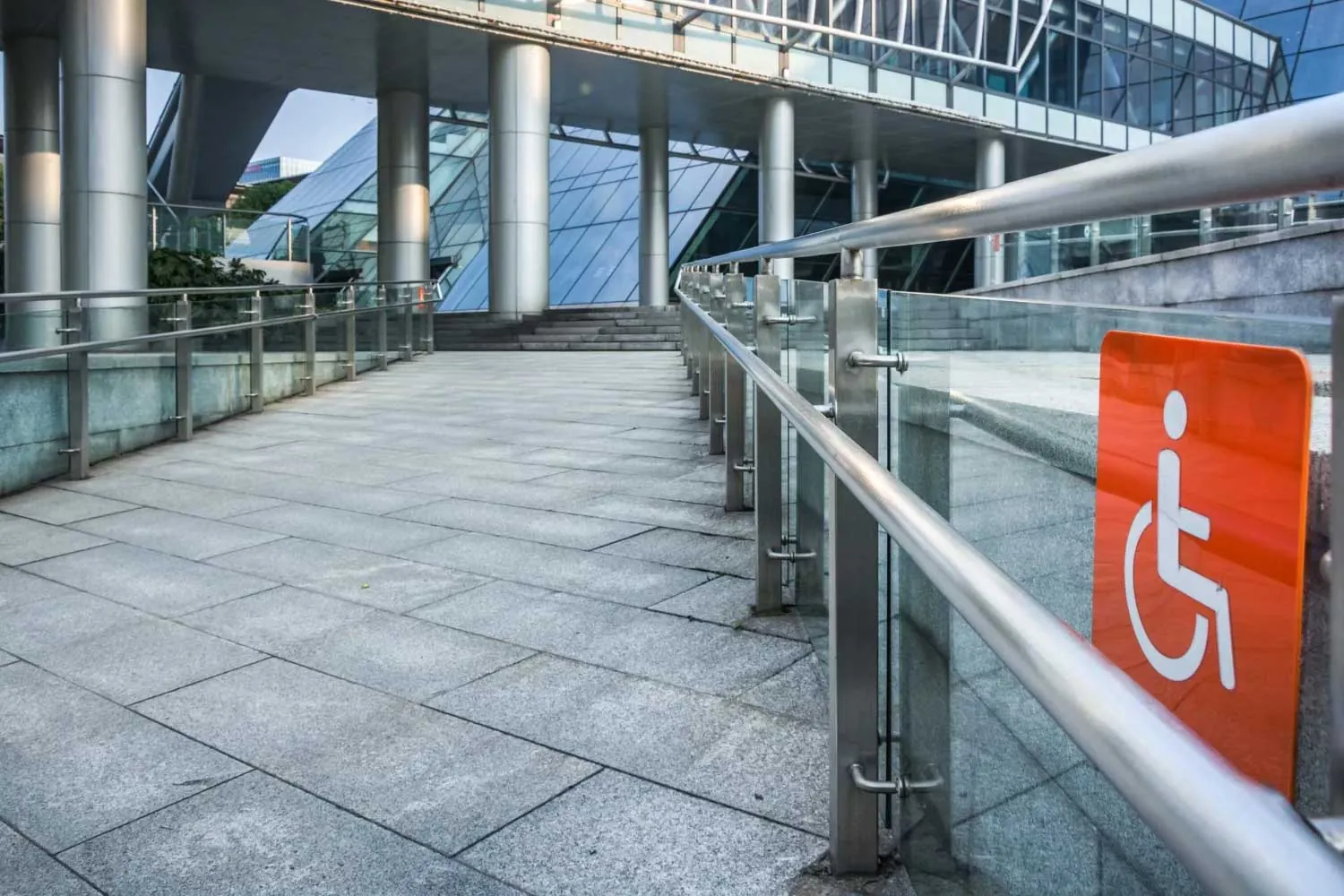
Grants and tax relief in 2026 (figures as at 29 October 2026)
The non-repayable grants under Legge 13 (Articles 9–11) are applied for through the local council, for works that remove barriers in existing buildings. Tax deductions, on the other hand, depend on other legislation. The removal of architectural barriers falls under the home renovation tax deduction in Article 16-bis of the Italian Consolidated Income Tax Act (TUIR): for expenditure incurred in 2026, the deduction is 50% if the work concerns the taxpayer’s main residence and is paid for by the owner or by the holder of another property right in it (diritto reale), and 36% in other cases, up to a maximum of €96,000 per housing unit, spread over ten years; in 2027 it will fall to 36% and 30% (Agenzia delle Entrate (opens in a new tab), update of 29 July 2026). The 75% deduction for overcoming architectural barriers (Article 119-ter of Decree-Law 34/2020) applied to expenditure incurred up to 31 December 2025 and has not been extended into 2026.
The results: what the data say
The ISTAT survey of schools for the 2024/25 school year measures the gap clearly. Two schools in five (40%) are accessible to pupils with motor disabilities, with a gap between the North (44%) and the South (35%). Only 16.5% provide visual signals for deaf or hard-of-hearing pupils, and just 1.2% have both tactile maps and tactile paths for blind or partially sighted pupils (ISTAT, Alunni con disabilità, 27 May 2026 (opens in a new tab)).
The data concern schools, which are governed mainly by Presidential Decree 503/1996, and do not isolate the effect of any single law; but they do show the gap across the whole regulatory system: lifts and ramps have arrived, but environments that everyone can read have not yet followed. And demand is growing: with 24.7% of its population aged 65 and over, Italy is the oldest country in the European Union (ageing and disability data in Europe).
The limitations: a law applied as a set of measurements
Criticism of Legge 13/89, without forgetting its benefits, concerns mainly the need for an update that reflects contemporary needs. It has been suggested that, rather than focusing only on removing physical barriers that already exist, we should adopt a design approach that eliminates barriers from the outset, with a wider and more diverse range of users in mind: this is what Design for All and Inclusive Design propose, two distinct and complementary approaches.
Ministerial Decree 236/89 provides detailed guidance for inclusive design, emphasising the accessibility, visitability and adaptability of spaces. However, these laws and regulations can lead to environments that meet legal requirements without taking an integrated view of people’s needs. Ministerial Decree 236/1989 also defines as a barrier “the lack of features and signage that enable orientation and the recognition of places” (our translation), but for sensory and perceptual abilities it offers few verifiable parameters: which is why, in practice, its application has stopped at mobility.
Towards performance-based rules: the Design for All proposal
Ministerial Decree 236/1989 already contains an open door: in Article 7.2 it allows, at the design stage, solutions that are alternatives to the technical specifications and solutions, provided they meet the needs implied by the design criteria and a report demonstrates their equivalent or better quality. It is a little-used option, because verifying performance requires expertise and method, whereas verifying a measurement requires only a tape measure. The revision we propose starts here.
The European framework is moving in the same direction. The standard UNI CEI EN 17210:2021 sets out functional requirements for the accessibility and usability of the built environment, that is, the performance a space must guarantee to people rather than the measurements by which it is achieved; internationally, the reference is ISO 21542:2021 on the accessibility and usability of the built environment.
In a revision of laws and standards, the result should remain mandatory and the means should be left open: prescribing the performance that a space must guarantee to people, not only the measurements by which it is achieved, so as to open the way to innovative, expressive and inclusive design. New rules should set verifiable performance targets and leave the choice of solutions to the design, taking into account the diversity of people’s functional and sensory needs. At the same time, it would be essential to introduce an adaptable assessment mechanism, based on quantitative and qualitative parameters, to judge how well a design responds to the diversity of human conditions and to the specific features of its environmental and social context. Such a system should make it possible to balance the need for accessibility standards with the unique requirements expressed by the various stakeholders who must be involved in the process, ensuring a simplified but effective check of the design work.
We work on this process with designers and public bodies through our Design for All and Inclusive Design consultancy. The same issues, applied to spaces, municipal plans and public funding, are discussed in the articles on accessible architecture, on PEBA plans in Lombardy and on the PNRR and accessibility.
Frequently asked questions
What can a person with a disability do if the building’s owners’ meeting does not reach a decision?
Article 2 of Legge 13 allows them to act independently: if the owners’ meeting refuses to decide, or fails to decide within three months of a written request, they may install stairlifts and mobile, easily removable structures at their own expense, and widen entrance doors.
What financial support is available in 2026 for removing architectural barriers?
The non-repayable grants under Legge 13, applied for through the local council, and the home renovation tax deduction: 50% for the main residence, if the expenditure is paid for by the owner or by the holder of another property right in it, and 36% in other cases, up to a maximum of €96,000. The 75% deduction applied until 31 December 2025.
Does Ministerial Decree 236/1989 allow solutions other than those prescribed?
Yes. Article 7.2 allows alternatives to the technical specifications, provided they meet the needs implied by the design criteria and a report demonstrates their equivalent or better quality.
Sources
- Legge 9 gennaio 1989, n. 13 (opens in a new tab), Gazzetta Ufficiale
- DM 14 giugno 1989, n. 236 (opens in a new tab), Gazzetta Ufficiale
- DPR 24 luglio 1996, n. 503 (opens in a new tab), Gazzetta Ufficiale
- DPR 6 giugno 2001, n. 380, artt. 77–82 (opens in a new tab), Normattiva
- Legge 3 marzo 2009, n. 18 (opens in a new tab) (ratification of the UN Convention), Normattiva
- European Commission, Strategy for the rights of persons with disabilities 2021–2030 (opens in a new tab)
- Agenzia delle Entrate, Ristrutturazioni edilizie, che cos’è (opens in a new tab) (update of 29 July 2026)
- ISTAT, Alunni con disabilità, a.s. 2024/25 (opens in a new tab) (27 May 2026)
In our projects
Read next
- GuidePEBA plans in Lombardy: the regional guidelines through a Design for All lensWhat do Lombardy’s guidelines require for PEBA plans?
- EssayAccessible architecture: innovation and inclusion in public and private spacesHow do you design accessible architecture that goes beyond the regulations?
- GuideDesign for All and Italy’s Recovery Plan (PNRR): what remains for accessibilityWhat has the PNRR left behind for accessibility?
From measurement to performance
With designers and public bodies, we work to ensure that solutions respond to the people who will use the space, not only to the prescribed measurements.