
Shade
A fold-down grab rail designed as furniture: minimal and unobtrusive
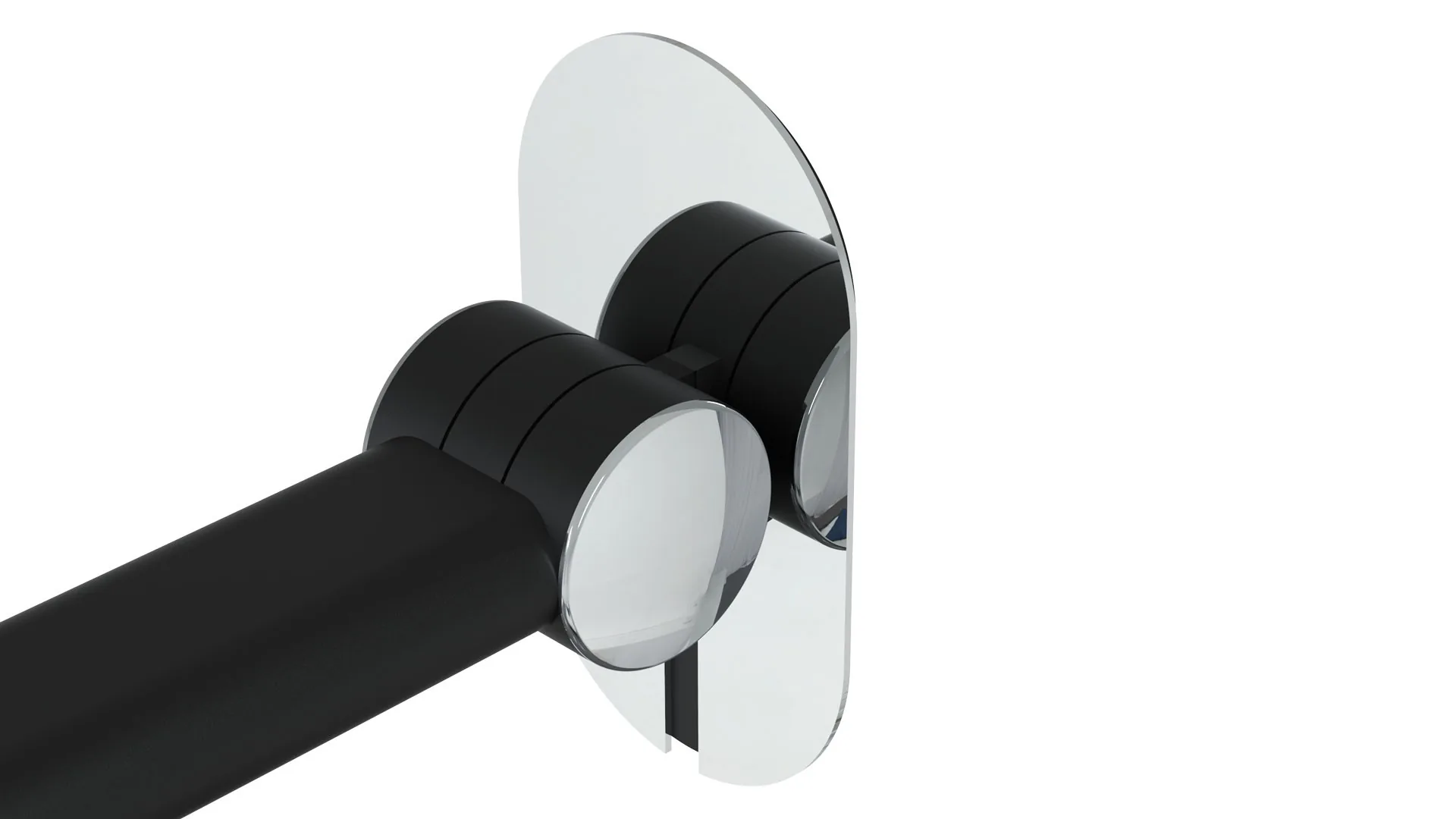
Produced by Goman with input from its R&D department, the new ergonomic Shade fold-down grab rail continues our exploration of Design for All in bathroom design, putting people’s needs and emotions at the centre. Shade is the result of a synthesis in which the technical element blends into the wall like a shadow (hence the name, Shade), merging elegantly with the other elements in the room and with the refined atmospheres of contemporary design.
The opportunity
The starting point
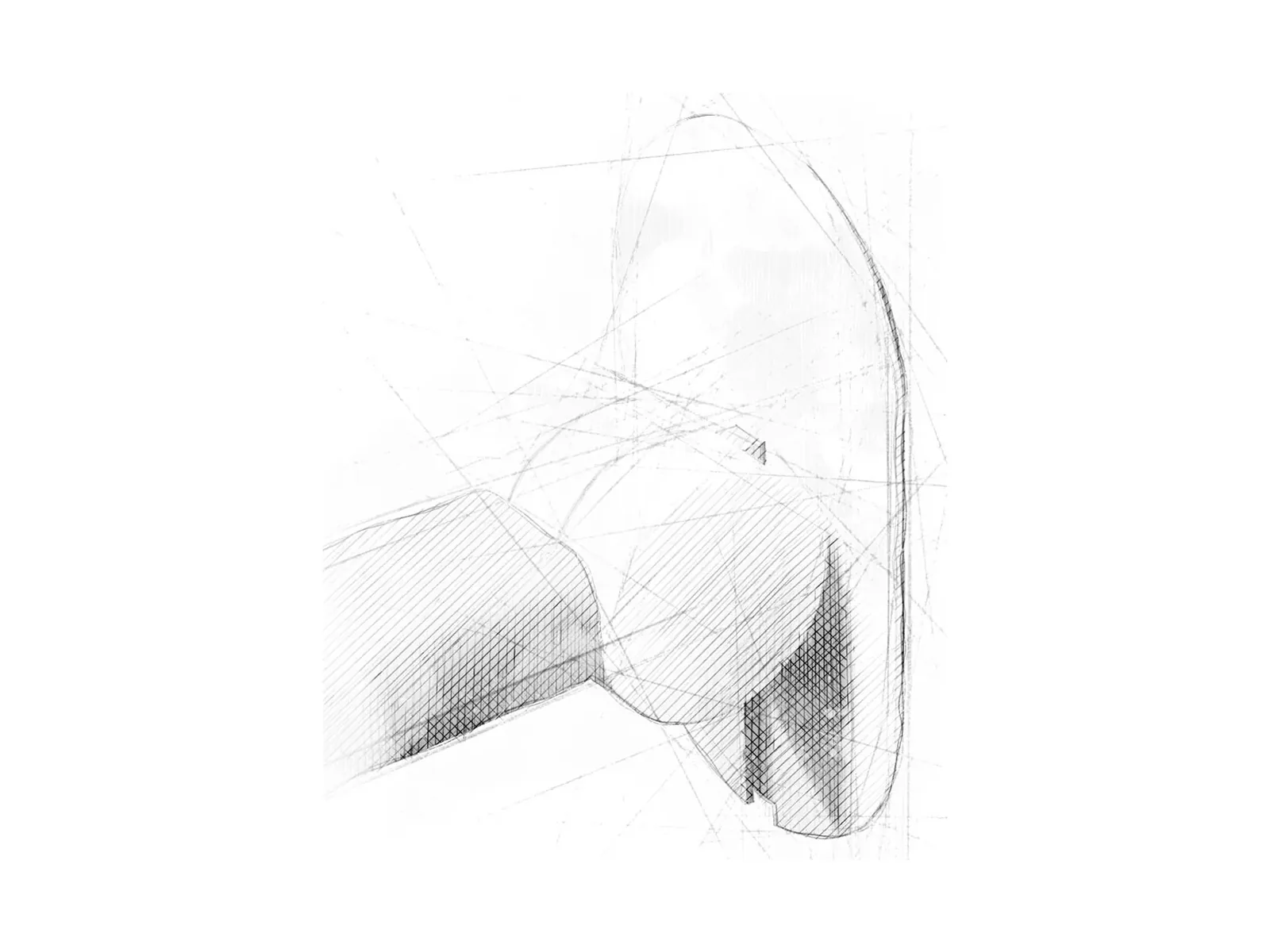
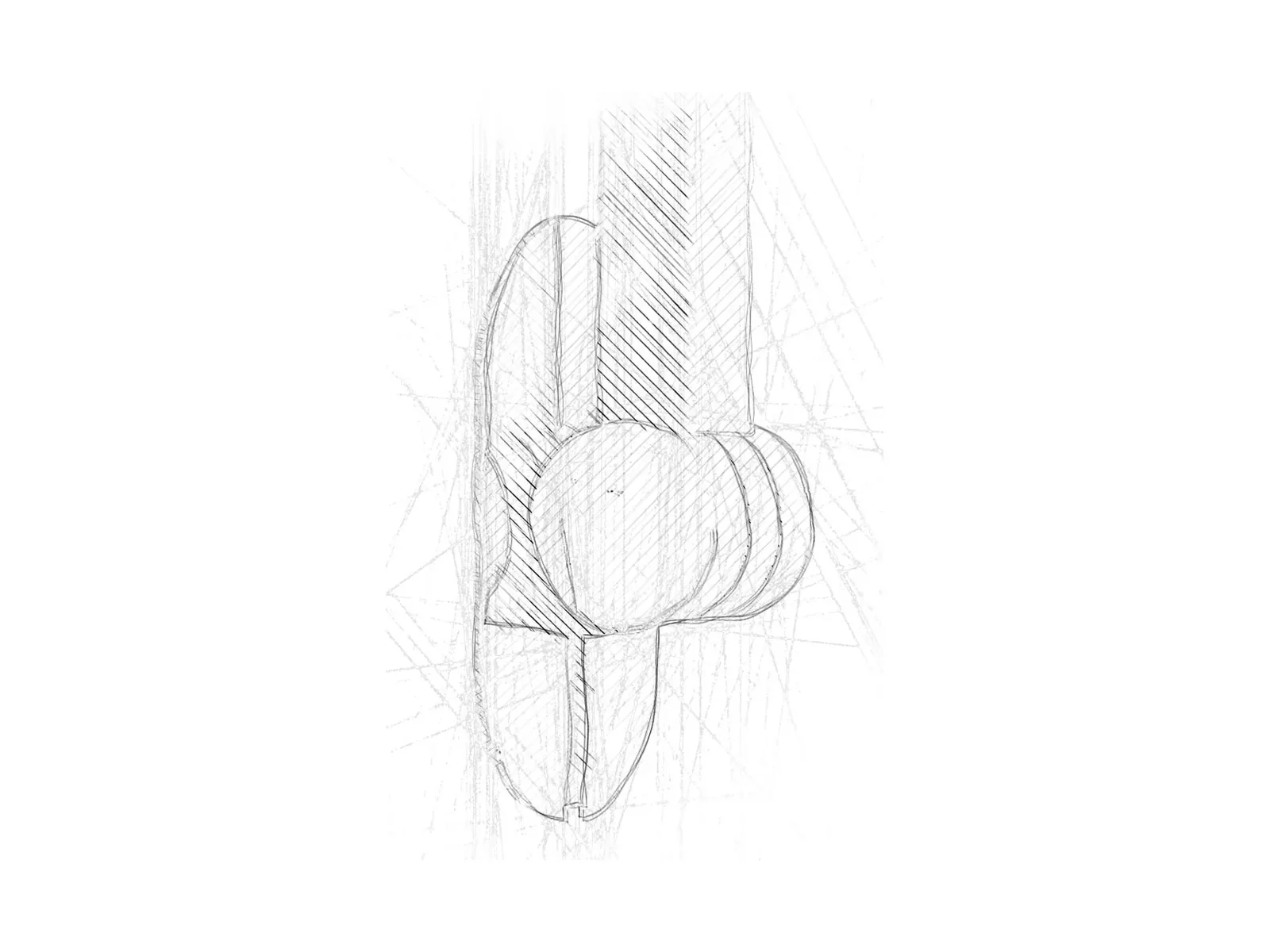
Unusually, the project starts from the technical element: a high-performance stainless steel hinge mechanism. Developed by the same department, it was already available and in use in another product. The idea therefore grew around reusing it in another product that usually requires high performance in terms of strength and load capacity: the fold-down grab rail, the support commonly used in the bathroom by people with disabilities, particularly people with mobility difficulties.
The mechanism stays in view: coloured like the wall, it disappears like a shadow.
Essential and discreet
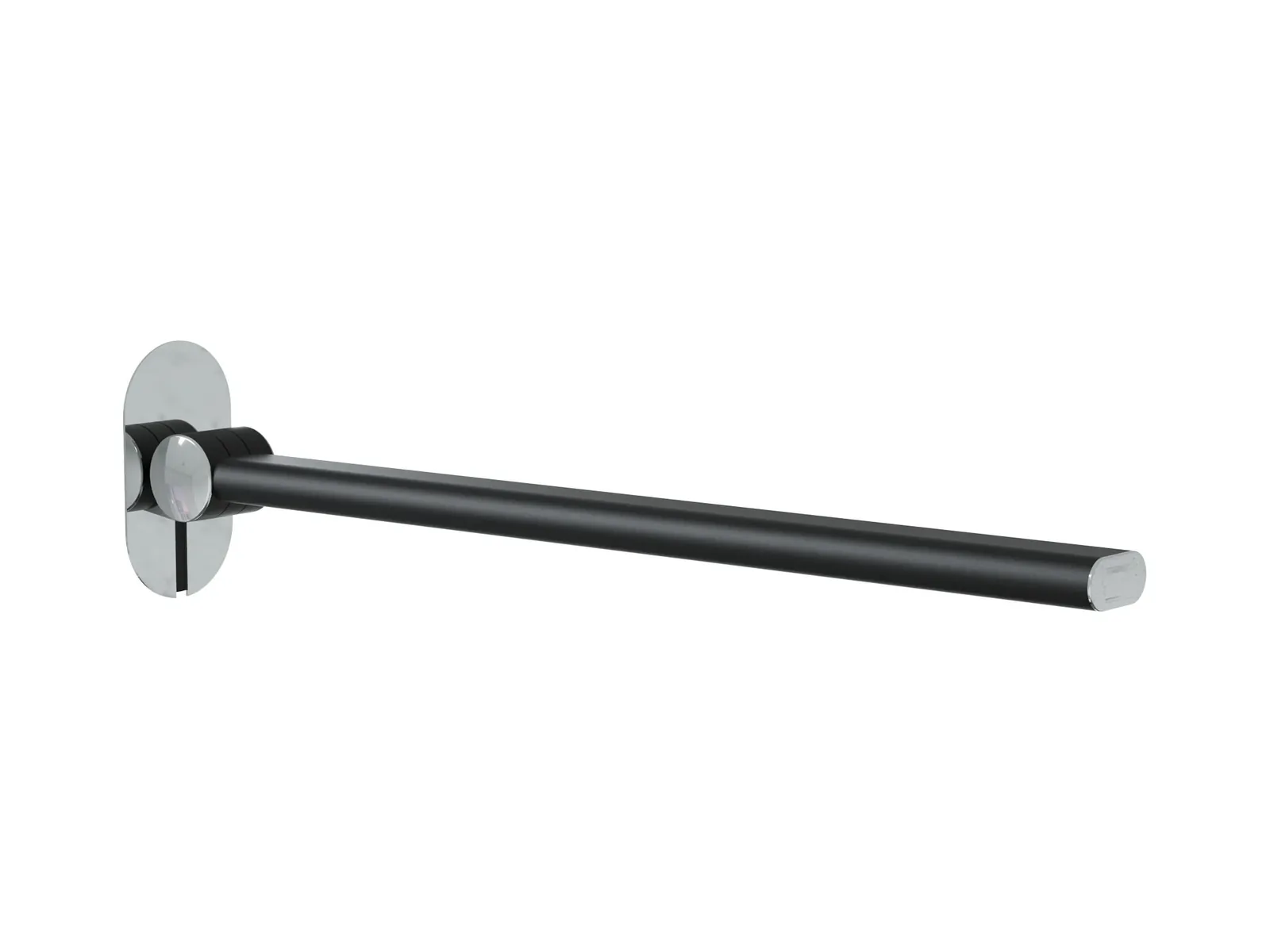
With its frame available on request in the full range of RAL colours and in chrome finishes, the Shade fold-down grab rail deliberately leaves behind the orthopaedic, needlessly clinical look typical of classic fold-down grab rails, and fits carefully into any bathroom as a furnishing element, essential and discreet.
The mechanism, which is very simple, can also be coloured like the wall: the technical element stays in view, yet disappears, like a shadow. Hence the name, Shade.
The studio’s ergonomic analysis also confirms that it is more practical to use than similar products, thanks to the cross-section of the tube, which provides a good resting surface.
The Giotto collection is another Design for All project for bathroom safety accessories.



Technical data
- Manufacturer
- Goman
- Lengths
- 42 cm and 60 cm
- Dimensions
- 100 × 179 × 600 mm, 60 cm version
- Tube
- steel, oval section 30 × 60 mm, 1.5 mm thick
- Finish
- wear-resistant epoxy-polyester coating, matt black RAL 9005 or matt white RAL 9016, with electroplated details
- Fixing
- AISI 430 stainless steel wall plate, with friction lock in the vertical position
- Load capacity
- 150 kg, as declared by the manufacturer
Source: Goman’s Shade 60 cm product sheet (opens in a new tab)
Frequently asked questions
Why is a fold-down grab rail needed next to the WC?
Next to the WC, DM 236/89 (the Italian Ministerial Decree on accessibility) requires at least 100 cm of clear space from the centre line for a wheelchair to pull up alongside and, if the WC is more than 40 cm from the wall, a grab rail 40 cm from the centre line for transfer. The fold-down grab rail meets both requirements: lowered, it provides support; raised, it leaves the side clear.
Do you want an accessible bathroom that does not look like an orthopaedic setting?
Bathroom products, furnishings and routes selected and designed with the people who will use them.